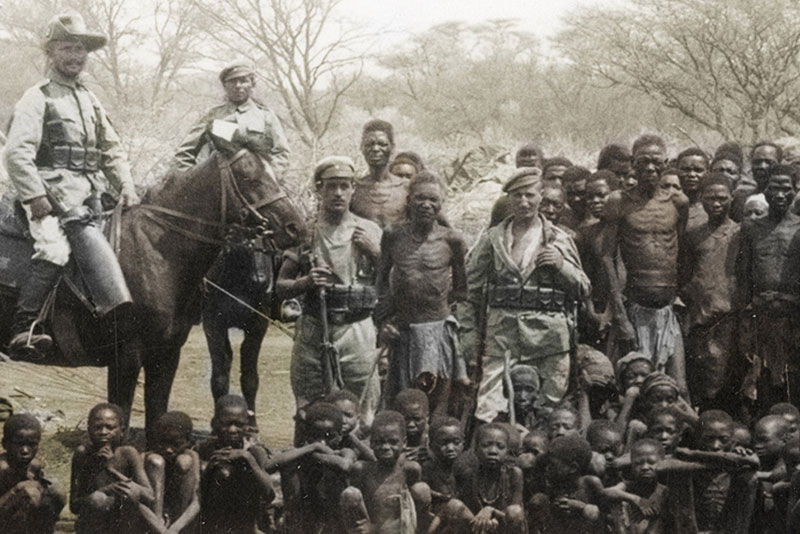
The desire for dominance and power by Europeans is widely documented in history books as having been built on the blood, sweat, and tears of countless innocent indigenous lives. Their legacy is evident in the bloody histories of the Americas, where colonial violence wiped out indigenous populations; Australia, where Aboriginal and Torres Strait Islander peoples were brutally suppressed; Asia, where the atrocities of British colonialism in India and Dutch rule in Indonesia left deep scars; and Africa, beyond the Congo, where the Herero and Namaqua genocide in Namibia and the forced labour camps in South Africa serve as reminders of the brutality of European colonialism.
The relocation of European settlers resulted in significant losses for Native American communities. Under the fraudulent pretense of ‘civilization,’ German colonial authorities unleashed a brutal campaign of extermination against the Herero and Namaqua peoples in Namibia. Driven by a singular desire for exploitation and domination, they subjected these communities to forced labour, concentration camps, and mass killings.
Around 65,000 Herero and 10,000 Namaqua people died, and the Herero population dropped from about 80,000 in 1890 to just 20,000 by 1911. This demonstrates the extent of Germany’s brutal colonial rule in Namibia. The purpose of this article is to explore Germany’s dark period of colonial rule in Namibia and its impact on the Herero and Namaqua tribes.
The Herero and Namaqua Tribe
There are about eleven major tribes or ethnic groups in Namibia: Ovambo, Herero, Kavango, Himba, Damara, Namaqua, San (Bushmen), Rehoboth Basters, Caprivian, Swana, and the Coloured communities. However, I will go into greater detail about the Herero and Namaqua tribes for the purposes of this article.
The Herero tribe, a Bantu-speaking group with a rich history that dates back to the 15th century, migrated to Namibia from the eastern regions of Africa, specifically the region of the Great Lakes. Over the next two centuries, they settled in central Namibia, establishing themselves as skilled pastoralists with a deep connection to their cattle. The Herero people have a complex social hierarchy and kinship system centered on ‘otuzo’ (patrilineage) and ‘oruzo’ (clan).
Otuzo refers to the lineage traced through the father’s side, influencing inheritance, family ties, and social responsibilities. Oruzo, on the other hand, refers to closer family ties, like having the same ancestry, culture, or identity. In this double descent system, people can find their roots in both their mother’s (eanda) and father’s (oruzo) lines.
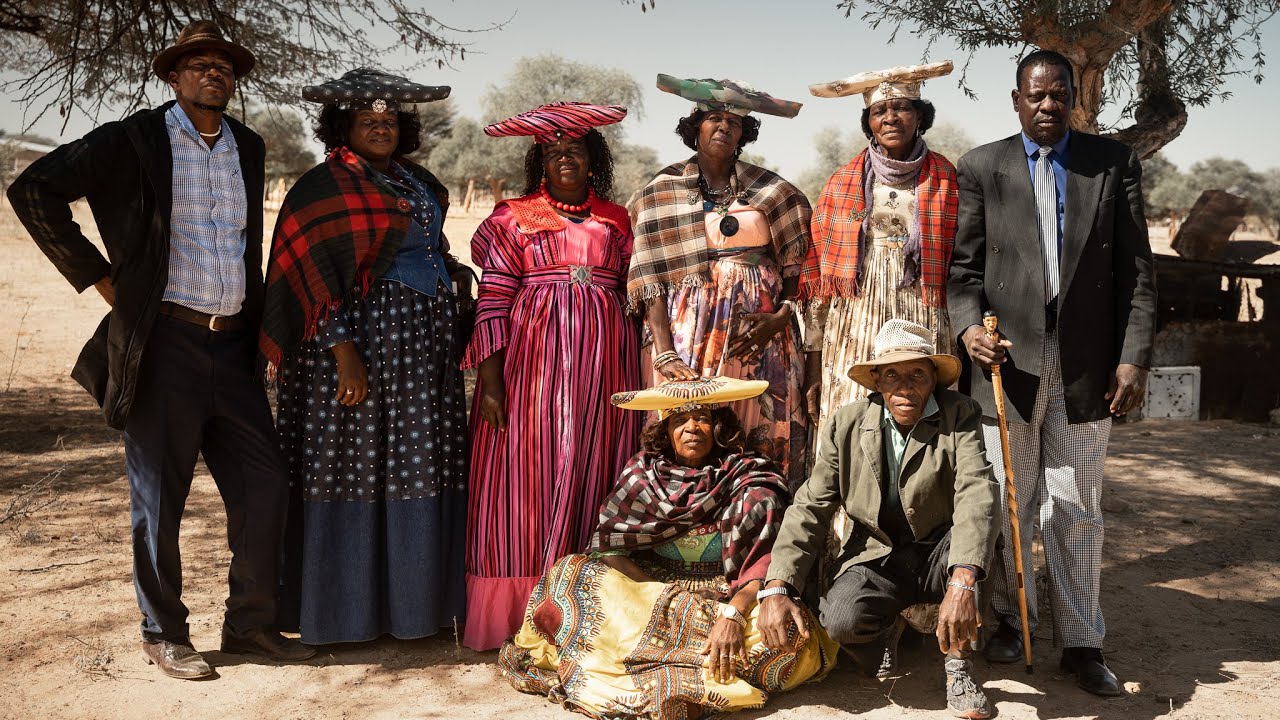
Herero culture was also renowned for vibrant traditional attire, including distinctive horn-like headpieces known as ‘otjize’, symbolizing marital status and cultural identity. The Herero people were renowned for their abilities as artisans, producing exquisite jewellery and traditional clothing. Their spiritual system was fundamental to daily life, as it honoured ancestral spirits and sacred cattle. In ceremonies and celebrations, traditional dances and music were used to demonstrate the mutual assistance and collaboration that was facilitated by community and familial connections.
In the same way as the Herero, the Namaqua people had also developed a cultural heritage that was specifically tailored to the arid desert environments of Namibia. As a Khoikhoi-speaking group, they were skilled hunters and gatherers, with an in-depth understanding of their ancestral lands, which held significant cultural and spiritual importance. Their society was organized around small, mobile groups, which were frequently instructed by a council of elders. These groups achieved consensus through dialogue and collective discussion.

The Namaqua people were celebrated for their prowess in tracking and hunting in the desert, relying on their understanding of the terrain and its inhabitants to ensure their survival. Music, dance, and stories were also important parts of Namaqua culture because they helped people remember their history, myths, and cultural values.
They helped one another survive in the hostile desert environment by working well together and having a strong feeling of community. Their traditional way of running things was with clan leaders and councils of elders who helped and guided the people in their communities. Additionally, the Namaqua people had a deep respect for their environment, utilizing sustainable practices to manage resources and preserve the delicate balance of the desert ecosystem.
Conflicts over territory and resources marked the complex historical relationship between the Namaqua and Herero people. In a series of wars, mostly in the 1800s, these two groups fought over land, water, and livestock. Despite these conflicts, both groups developed a deep understanding of their environments, allowing them to coexist in a delicate balance with nature. Notwithstanding the conflicts between them, their complex systems of traditional knowledge and customs demonstrated a deep regard for the land and their ancestors.
In addition to the internal strife between these two tribes, the arrival of German colonists would present the Herero and Namaqua people with much bigger difficulties and permanently alter their way of life. This invasion, which was disguised as civilization, resulted in one of the most devastating genocides in human history.
What Led to the German-Herero conflict of 1904?
Germany’s colonial rule in South West Africa (1884–1915) was in direct opposition to its stated principles. When Germany took over Namibia, they disregarded the Herero and Namaqua people’s existing social and cultural structures by imposing their own administrative systems, laws, and taxation policies without consent.
The Herero and Namaqua were forced to pay taxes, such as hut taxes, and adhere to German laws that undermined their traditional way of life. The German colonial government also imposed forced labour, confiscated land, and restricted access to water and grazing areas.

The equilibrium was thrown off when the German colonial government imposed its own system. By 1903, tensions escalated over limited resources like land, water, and cattle as around 3,000 German colonists settled on the central high grounds, often through dubious means such as fraudulent land treaties or outright seizure.
German colonists and traders forcibly displaced the Herero and Namaqua, subjecting them to harsh treatment and forced labour. The Herero, in particular, were galvanized into resistance due to the rapid loss of their ancestral lands and livestock, which were crucial to their economic and cultural survival, leaving them with little choice but to rebel against the German colonizers.
Samuel Maharero, a paramount chief of the Herero people, played a significant role in the events leading up to the conflict. Maharero, who was born in 1856, had already made an effort to bargain with German officials in order to defend Herero rights and territory. However, as German encroachment intensified, Maharero became increasingly frustrated with the lack of meaningful response.

Faced with the loss of ancestral lands, livestock, and cultural identity, Maharero ultimately decided to lead the Herero rebellion against German colonial rule in 1904. Notably, he issued a crucial directive that specifically prohibited violence against women, underscoring his commitment to protecting the vulnerable during the conflict.
This stance was significant, especially given the brutal treatment Herero women had faced under German rule. The fighting began on January 12, 1904, when Herero fighters, driven by desperation and a desire for self-preservation, surrounded the German fort in Okahandja and laid siege to it, marking the beginning of a fierce and tragic conflict.
Maj. Theodor Leutwein, the military commander and governor in 1894, had attempted to balance German interests with Herero concerns, recognizing that a pragmatic approach would allow for coexistence and stability in the colony. He understood that the Herero were a significant force in the region and that a peaceful resolution would benefit German economic and strategic interests.
Leutwein initially advocated for a negotiated settlement, hoping to avoid bloodshed and find a middle ground that would accommodate both German and Herero needs. However, the Berlin General Staff, driven by a militaristic and expansionist ideology, opted for a military response instead.
They believed that a decisive military victory would solidify German control, crush Herero resistance, and demonstrate the power of the German Empire. This approach was in line with the prevailing attitudes of colonial powers at the time, which often prioritized dominance and control over native populations. The decision made by the General Staff was part of a larger plan to bolster German power and quell any possible opposition to their rule.
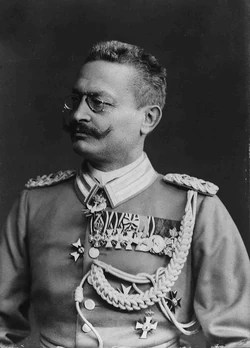
Following the retreat of his troops on April 13, Leutwein was relieved of his military command, and Kaiser Wilhelm II, the German Emperor known for his militaristic ideology and colonial ambitions, appointed Lieut. Gen. Lothar von Trotha as the new commander in chief. Von Trotha, a seasoned military officer with experience in suppressing resistance, had previously served in the Boxer Rebellion and colonial wars in East Africa. Born in 1848, he was known for his ruthless military strategies and unwavering commitment to crushing opposition.

When Lieutenant General Lothar von Trotha arrived on June 11, 1904, he discovered a brief ceasefire in hostilities, which had been prompted by the Herero’s withdrawal to the Waterberg plateau searching for a safe haven and potential escape routes into British Bechuanaland (now Botswana), driven by the relentless German military pressure and land seizures that threatened their survival.
The plateau’s natural defences and proximity to the border made it an attractive temporary refuge. Von Trotha saw an opportunity to encircle and crush the Herero forces, recognizing their temporary vulnerability. He launched a massive encirclement operation, strategically positioning his troops to cut off Herero escape routes.
On August 11, 1904, Lieutenant General Lothar von Trotha launched a surprise attack with 1,500 troops against an estimated 40,000 Herero at Waterberg. Despite being outnumbered, the German forces leveraged their superior firepower and artillery to gain a decisive advantage. The Herero, realizing they were outgunned and outmanoeuvred, fled into the Kalahari Desert searching for safety, but thousands perished due to harsh conditions.
Von Trotha’s forces pursued, and many Herero who surrendered or were captured were executed. The pursuit was eventually abandoned in October due to logistical challenges, exhaustion, and supply shortages.
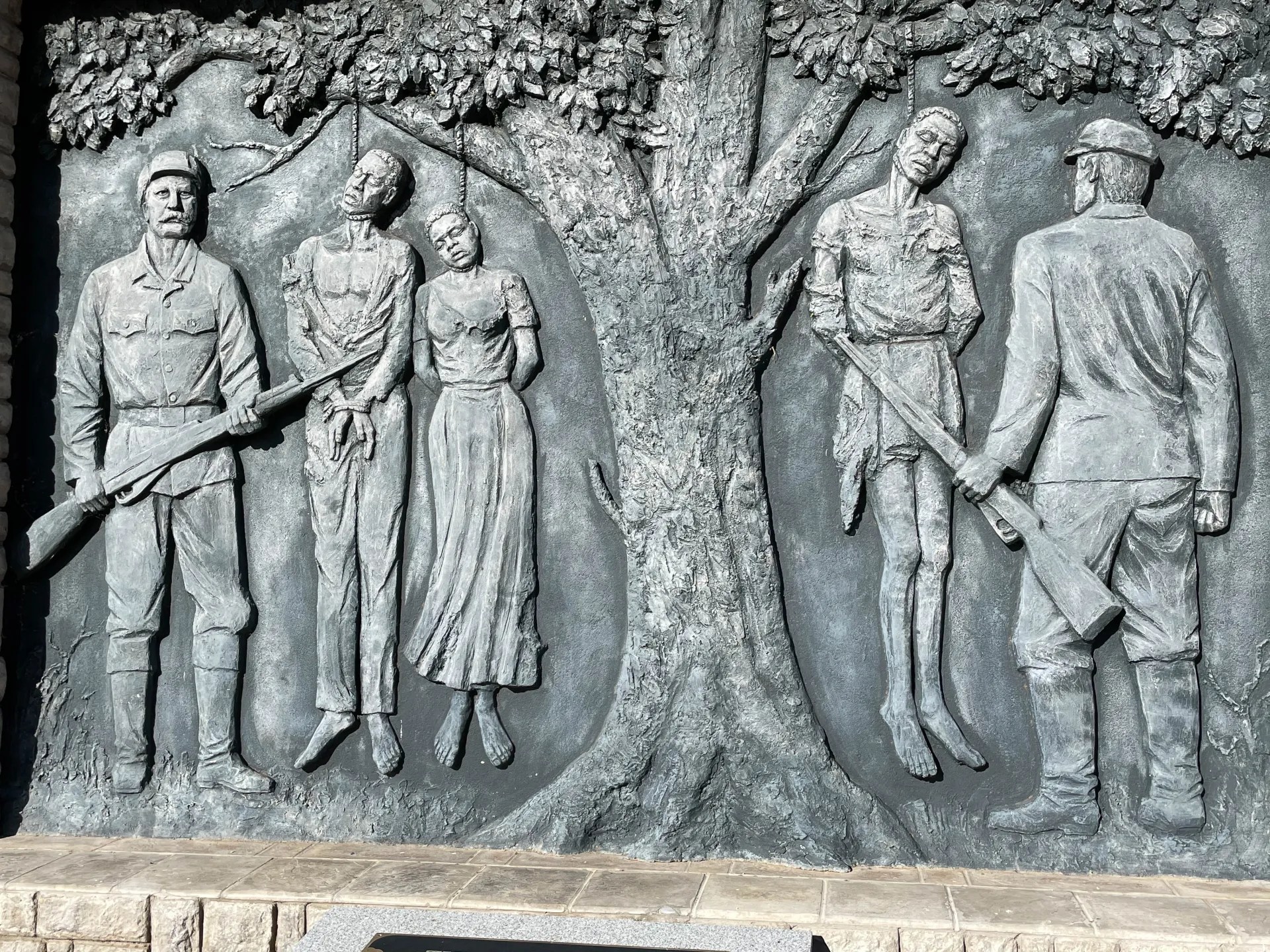
After von Trotha’s pursuit was halted, patrols were stationed along the desert’s edge to prevent the Herero’s return. This policy was outlined in the “extermination order” (Vernichtungsbefehl), issued by Lieutenant General Lothar von Trotha on October 2, 1904. The order directed that any Herero found within the German colony’s borders would be killed or forced into the desert.
This policy led to the deaths of tens of thousands of Herero people due to starvation, dehydration, and violence. A turning point in the war was the extermination order, which signalled a move toward systematic violence and persecution of the Herero people. The order read, inter alia:
Within the German boundaries, every Herero, whether found armed or unarmed, with or without cattle, will be shot. I shall not accept any more women and children – Lieutenant General Lothar von Trotha
The “extermination order” stood for two months before being rescinded by Kaiser Wilhelm II on December 9, 1904, due to pressure from Reich Chancellor Bernhard von Bülow, who was concerned about the international backlash and the economic costs of annihilating the Herero population. Germany needed the Herero as a workforce to support its colonial economy.
However, the new policy that followed was hardly more humane. Inspired by the British concentration camps during the South African War, the Germans established their own Konzentrationslager (concentration camps), where Herero prisoners, mostly women and children, were imprisoned and subjected to forced labour under brutal conditions, including starvation, disease, overwork, and physical abuse, leading to high mortality rates.
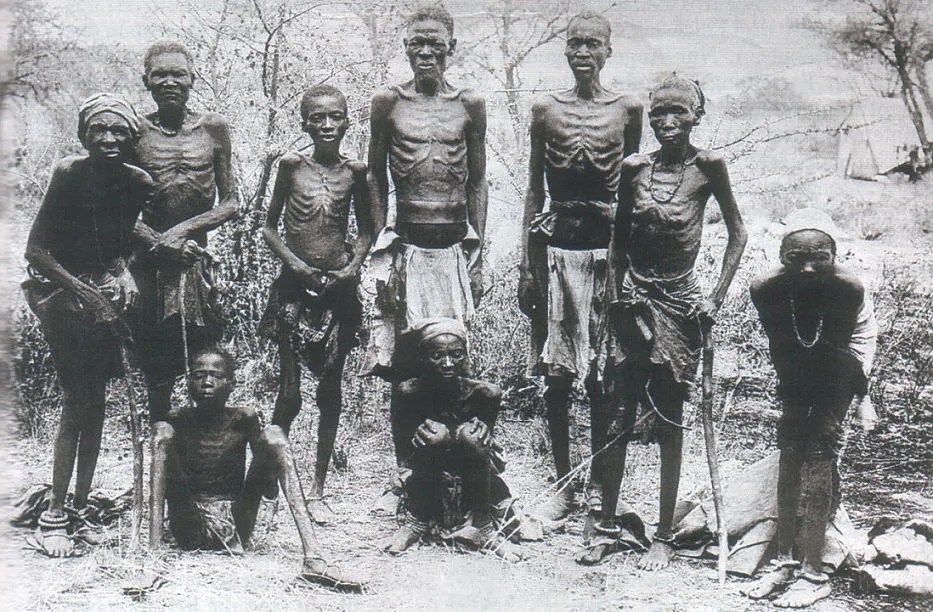
In October 1904, the Namaqua communities joined the resistance against German colonial rule, sparked by the imprisonment and mistreatment of their leader, Hendrik Witbooi, a prominent Namaqua chief and skilled negotiator. The Namaqua had long resisted German encroachment, and the ongoing genocide of the Herero people likely further galvanized their decision to rebel.
Like the Herero, they were eventually imprisoned in concentration camps, with most being sent to the notorious Shark Island camp near Lüderitz. Shark Island, a penal camp located on a cold, exposed island connected to the mainland by a causeway, was infamous for its harsh conditions.
Prisoners were forced into hard labour, often dying from exposure to the cold Benguela Current, a cold ocean current flowing along the southwestern coast of Africa, as well as malnutrition and disease. The lack of adequate shelter made survival nearly impossible, and an estimated 80 percent of Namaqua prisoners perished there due to these harsh conditions.

The atrocities committed by Germany in Namibia eventually came to light through various means, including survivor testimonies, missionary reports, and diplomatic correspondence. After World War I, Germany was forced to relinquish its colonial control over Namibia to South Africa under the Treaty of Versailles in 1919. The administration was handed over to the Union of South Africa, a government that enforced apartheid policies.
The Union of South Africa governed Namibia under a League of Nations mandate and implemented policies that continued to impact the lives of Namibians significantly. It wasn’t until much later, in 1966, that German historian Horst Drechsler explicitly characterized the campaign against the Herero and Namaqua as genocide, shedding light on the extent of the atrocities.

The extent of the devastation was astounding. Roughly 50% of the Namaqua population, or about 10,000 people, and roughly 75% of the Herero population, or about 65,000 people, died in concentration camps from disease, starvation, and brutal executions. Mass executions, inhumane living conditions, and forced labour carried out under the pretense of “pacification” resulted in one of the most severe genocides in human history. This tragic episode was a part of a larger pattern of colonial violence and genocide, whereby indigenous populations suffered greatly at the hands of European powers.
For the Herero and Namaqua, the genocide caused intergenerational trauma, cultural disruption, and loss of land, identity, and heritage. Since the idea of racial superiority and extermination policies were tested and refined in colonial contexts, the legacy of these crimes may have also had an impact on the development of Nazi ideology and tactics used during the Holocaust. The horrors of the Holocaust were a result of a larger culture of violence and dehumanization that was influenced by the trauma and atrocities carried out in Namibia.
Conclusion
The legacy of German colonial rule in Namibia continues to be a contentious and painful matter. Although Germany has admitted to being a part of the genocide and given financial support, this is a long way from being a true reparation. The absence of direct input from the Herero and Namaqua communities in the aid package, has raised concerns regarding Germany’s commitment to addressing its blood-stained colonial history.
What is even more disheartening is that this tragic period in history has not been recognized on a global scale. Apart from a few people in Namibia and possibly Southern Africa, not many people are still aware of the atrocities committed by Germany.
Sources
- Drechsler, H. (1966). Südwestafrika unter deutscher Kolonialherrschaft [South West Africa under German colonial rule]. Akademie-Verlag.
- Zimmerer, J., & Zeller, J. (2003). Völkermord in Deutsch-Südwestafrika: Der Kolonialkrieg (1904-1908) in Namibia und seine Folgen [Genocide in German South West Africa: The colonial war (1904-1908) in Namibia and its consequences]. Ch. Links Verlag.
- Erichsen, C. W. (2005). What the Elders Used to Say: Namibian Perspectives on the Last Decade of German Colonial Rule. Namibia Institute for Democracy.
- Gewald, J.-B. (1999). Herero Heroes: A Socio-political History of the Herero of Namibia, 1890-1923. Ohio University Press.
- Silvester, J., & Gewald, J.-B. (2003). Words Cannot Be Found: German Colonial Rule in Namibia: An Annotated Reprint of the 1918 Blue Book. Brill.
- Hinz, M. O. (2008). The Namibian Genocide: A Study of the Historical and Contemporary Relevance of the Herero and Namaqua Genocide. Namibia Wissenschaftliche Gesellschaft.
Leave a Reply