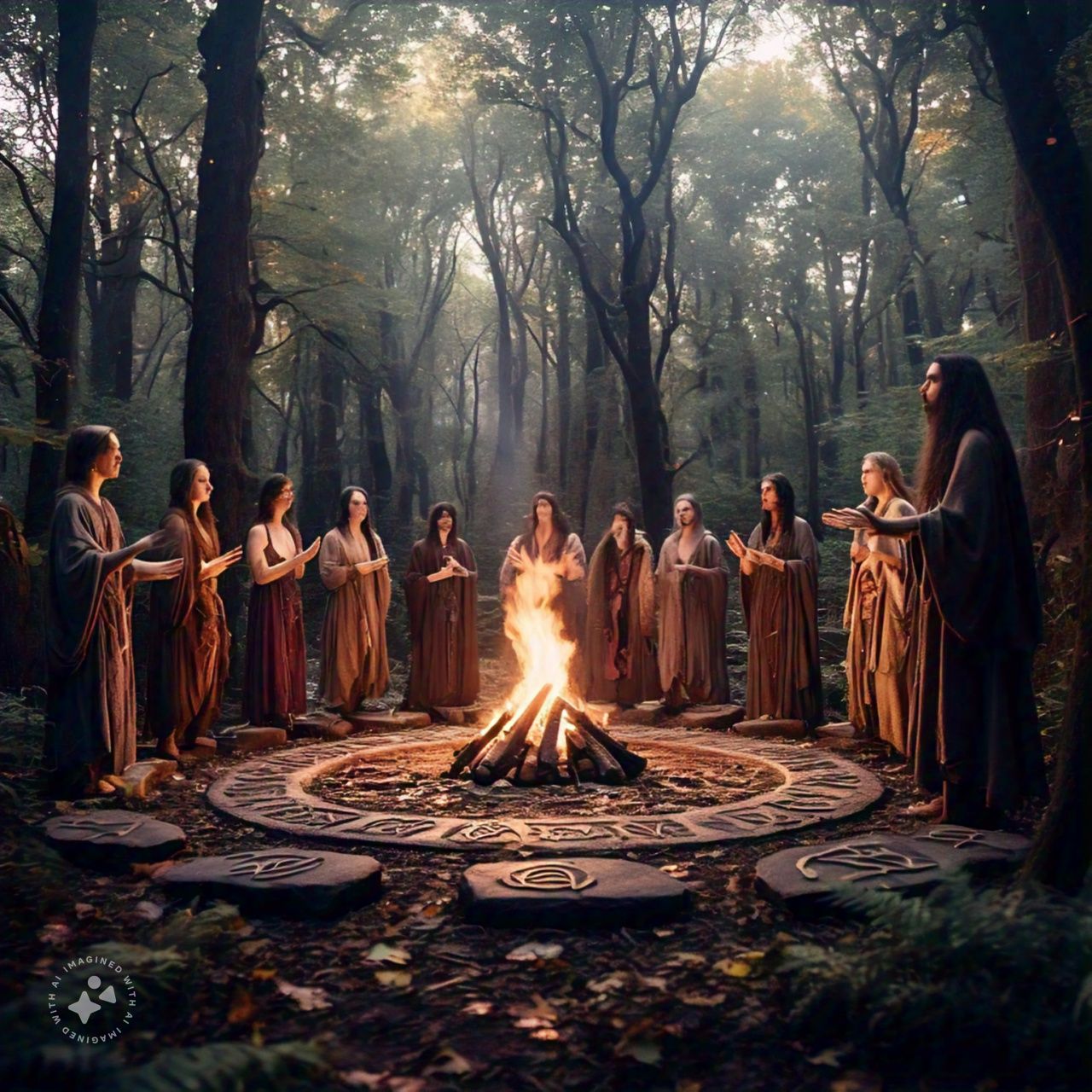
While studying paganism, I discovered that many of the traditions and holidays we observe today may have their roots in it. The ancient Babylonians were the first to popularize paganism, which is why God rebuked their way of life.
It’s important to understand that pagan practices went beyond adoring idols or sacrificing people to please a deity. It also involved other dark acts that many people are unaware of today.
To begin with, the Roman Empire was so engaged with Paganism that it became a religious practice in Rome. The Roman-founded Catholic Church played a significant role in globalizing paganism as Christianity spread from rome to the rest of the world.
The Edict of Milan (313 AD) legalized Christianity, paving the way for Paganism’s incorporation into Christian rituals. This merger allowed Pagan traditions to survive, disguised as Christian practices. As a result, Pagan-infused practices were exported globally, influencing celebrations and customs worldwide. Here are some examples:
Halloween
Halloween, one of the world’s oldest and most widespread celebrations, is one festival that is rooted in ancient pagan traditions. Its origins date back to the Celtic festival of Samhain, which marked the end of the harvest season and the beginning of winter.
According to historical records and Celtic mythology, Samhain was observed on November 1st, a time when the Celts believed the boundary between the living and the dead became blurred. On this night, the Celts believed that:
- The veil between the mortal world and the spirit realm was at its thinnest.
- Spirits of the deceased returned to the world of the living.
- The gods and goddesses of the Celtic pantheon were honoured.
To ward off malevolent spirits, the Celts would:
- Leave food and drink offerings for their ancestors.
- Light bonfires to symbolize the light of life.
- Wear costumes and masks to disguise themselves as spirits.
Furthermore, the ancient Roman festivals known as Pomona and Feralia, also celebrated from October 31 to November 2, also had a similar practice that involved leaving food and drink offerings at the graves of loved ones to honor their memories and appease the spirits of the dead. This practice, known as “ancestor worship,” was a common feature of ancient Roman religion.
Historians suggest that the Roman tradition of offering food and drink to the spirits of their ancestors may have influenced the development of modern-day trick-or-treating. The early Christian church, under the influence of Roman emperors, incorporated elements of these pagan festivals into the celebration of All Souls’ Day (November 2), which eventually merged with the Celtic festival of Samhain to become the modern holiday of Halloween.
As Christianity spread throughout Europe and the rest of the world, the Catholic Church simultaneously established All Saints’ Eve on November 1st to commemorate their deceased saints and martyrs. Over time, this festival became part of the Samhain traditions and became Halloween as we know it today.
For instance, the tradition of wearing costumes originated from the Celtic practice of disguising oneself as spirits to ward off malevolent entities. Jack-o’-lanterns were made from turnips, which represented spirits coming back from the afterlife.
Currently, people around the world celebrate Halloween with many traditions and customs, like Mexico’s Da de los Muertos (Day of the Dead), Japan’s Obon Festival, and China’s Hungry Ghost Festival.
Valentine’s Day
Beyond its modern portrayal of love and romance, Valentine’s Day has a complex history rooted in ancient Roman fertility festivals. The celebration’s origins can be traced back to Rome’s Lupercalia festival, honouring the god Lupercus, who protected farmers and shepherds, ensuring a prosperous year.
Observed in mid-February, Lupercalia involved rituals of feasting, sacrificing goats and dogs, and promoting fertility. The Luperci, Roman priests, would run naked through Rome’s streets, carrying strips of goat skin called “februa,” believed to promote fertility. Women would be flogged with these strips, supposedly enhancing their fertility. The festival also included a lottery system, where men randomly selected partners from a jar containing women’s names.
Lupercalia’s emphasis on fertility, purification, and violence starkly contrasts with the modern Valentine’s Day celebrations. As Christianity gained popularity, the Catholic Church attempted to supplant Lupercalia with St. Valentine’s Day, honouring martyred saints. Despite this, Lupercalia’s pagan traditions persisted.
The Roman Catholic Church recognizes at least three martyred saints named Valentine, with St. Valentine of Rome being the most influential. According to legend, Emperor Claudius II prohibited marriage, but St. Valentine defied this edict by performing secret weddings.
Easter Celebration
In one of my articles, I emphasized that Easter has its origins in ancient pagan cultures. This celebration was originally intended to honor Eostre, a West Germanic spring goddess. The arrival of longer, brighter days and abundant food was cited as reasons for this celebration. Eostre’s origins can be traced back to Babylon, where she was revered as Ishtar, the goddess of fertility and spring.
The Easter bunny, a beloved symbol of the holiday, has its origins in pre-Christian, pagan cultures. The hare was a sacred animal associated with Eostre (also known as Ostara), the ancient Germanic goddess of spring, fertility, and rebirth. Eostre’s connection to the hare was rooted in its remarkable reproductive abilities, which made it a potent symbol of fertility.
According to folklore, Eostre was often depicted with a hare companion, which further solidified the animal’s association with the goddess. Ancient Germanic and Anglo-Saxon cultures also observed the Eostre festival. This festival marked the return of longer days, new life, and fertility. Some rituals and customs included:
- Honouring Eostre’s sacred animals, including the hare and lamb
- Lighting fires (bonfires) to symbolize the return of sunlight and longer days
- Decorating eggs, a symbol of new life and fertility
- Consuming seasonal foods, such as lamb and spring greens
The Easter parade is not left out of the equation, as it may have originated from Eostre processions, where worshippers carried idols and sacred animals.
Christmas
In another of my articles, I did disclose the dark history of Santa Claus and how the celebration of Christmas may have been rooted in ancient pagan culture. Christmas, a holiday associated with joy and giving, has its origins in ancient pagan cultures. Originally celebrated as the pagan festival of Yule, it celebrated the continuation of life during the darkest months.
Many traditions associated with Yule still exist today in modern Christmas celebrations. The Yule log, once burned as a symbol of the return of the sun, now decorates fireplaces around the world. Giving gifts, which was originally part of the Roman festival of Saturnalia, is still an important part of the Christmas tradition. Moreover, decorating homes with green plants like mistletoe, holly, and ivy came from Yule customs.
Saturnalia, a celebration dedicated to Saturn (Satan), the Roman deity of agriculture, entailed feasting, gift-giving, and amusement. This was also identical to the Germanic tribes’ celebration of Yule with the lighting of bonfires, which symbolized the rebirth of the sun. Even ancient Celtic and Druidic cultures celebrated the winter solstice with sacrifices and rituals.
The date of Christmas, December 25, coincides with ancient festivals, including the Roman festival of Sol Invictus, the Germanic festival of Yule, and the Celtic festival of Alban Arthan, which means “Rebirth of the Sun.” Early Christians adopted these pagan traditions, combining them with Christian symbolism. Even the evergreen tree, which was once a pagan symbol of life, subsequently evolved into the Christmas tree. Holly and Ivy, another pagan practice that symbolizes life and friendship, are now featured in Christmas decorations.
Tooth Fairy
Before Christianity, people in Northern Europe, especially Viking and early Norse societies, had a custom called the Tooth Fairy. Some warriors, especially those of the Viking era, thought that children’s teeth would bring good luck during battle, so they would get them and wear them as adornments. This practice later became known as paying children a ‘tooth fee’ when they lost their first tooth.
In Norse mythology, ravens represented the loss of teeth. In Celtic customs, a lost tooth was buried to prevent witches from using it for malicious purposes. Over the years, this idea became part of many European and Latin American cultures, where children’s teeth are thought to keep evil spirits away.
In France, La petite souris (Little Mouse) was known to exchange gifts for teeth. In Spain, Ratoncito Pérez, also known as Little Pérez Mouse, gathers teeth, retrieves them, and places them under a child’s pillow. Perez then substitutes it with a gift, which may not always take the form of money, and leaves it for discovery in the morning. In Italy, a witch named La Befana gives gifts to children on the day of Epiphany. These characters often embody pagan mythological figures.
Conclusion
Pagan practices have become part of things that bring people pleasure. This is because almost every celebration, culture, and activity we observe today is based on paganism. It is no surprise that the Bible urged us to avoid the ways of the world, since many of the things that have been incorporated into its way of life are connected to dark practices.
As I often say, do not simply read the scripture and understand it through the eyes of a person who still has their heart set on things of this world. You need to pray for knowledge to understand what you read and where most of the things we practice come from.
Do not emulate the ways of the pagans. For a friend of the world is an enemy of the Most High.
Sources
Herodotus. (c. 440 BCE). The histories. Retrieved from https://www.perseus.tufts.edu/hopper/text?doc=Hdt.
Pliny the Elder. (77 CE). Naturalis historia (W. H. S. Jones, Trans.). Retrieved from https://www.perseus.tufts.edu/hopper/text?doc=Plin.+Nat.
Encyclopedia Britannica. (n.d.). Eostre. Encyclopedia Britannica. https://www.britannica.com/topic/Eostre-Germanic-deity
Leave a Reply