The Middle East is plagued by instability and complex crises, shaped by decades of social discontent, ethnic-sectarian divisions, Jihadism, and the Israeli-Palestinian conflict. Amidst this turmoil, Jordan stands out as a stable Arab nation, but its stability came at a cost.
After gaining independence post-WWWII, Jordan faced challenges from Israel, including the 1948 Arab-Israeli conflict, which brought a massive influx of Palestinian refugees and forced Jordan to redefine its identity.
Jordan built a national identity, navigating its complex history and relationships with neighboring countries. The Hashemite family led the country through tough times, with King Hussein’s determination driving transformation from chaos to peace and order.
The Journey from Transjordan to Jordan
Transjordan gained independence from Britain post-WWWII, led by Emir Abdullah, a key figure in the Arab revolt against Ottomans. The Hashemites’ close ties with Britain resulted in significant British influence, especially in Jordan’s armed forces, where British officers commanded the Arab Legion. Jordan’s first major test came when the UN divided Palestine between Arabs and Jews, setting the stage for regional tensions.
The Islamic world opposed the UN decision, and King Abdullah led the Muslim retaliation, declaring war on Israel despite his private ties with Zionist leaders. This impulsive decision reflected Jordan’s pattern of reacting to public pressure and local circumstances. At the end of the war, the alliance lost badly because Israel got more land than they were supposed to, including 60% of the planned Arab settlement.
Jordan’s Arab Legion maintained a strong military record, controlling the West Bank and East Jerusalem. After independence, the nation was officially renamed Jordan in 1949, with Abdullah ibn Hussein incorporating it into the Jordanian Kingdom. Jordan then annexed the West Bank, recognized only by Britain and Pakistan, increasing its population from 400,000 to 1.3 million.
This annexation granted full rights to Palestinian refugees in the West Bank and East Jerusalem, unlike those who fled to other Arab countries. This move highlighted Jordan’s unique connection to the Palestinian struggle, with two-thirds of its population being Palestinian.
As King Abdullah’s pro-Arab stance strengthened, opportunities grew for Palestinians, but concerns arose among Jordanians who felt he was too harsh on Zionist Jews and too supportive of Palestine. Tensions escalated, and in 1951, King Abdullah was assassinated at Al-Aqsa Mosque by a Palestinian nationalist linked to the former Mufti of Jerusalem.
Jordan’s turbulent period during the 1950s and 1960s
King Abdullah’s assassination led to his son Talal’s ascension. Talal’s key achievement was establishing Jordan’s 1952 constitution, transforming the kingdom into a constitutional monarchy. However, he was forced to step down due to schizophrenia and spent the rest of his life in a sanatorium in Istanbul, dying on July 7, 1972.
A regency council ruled until Talal’s son, Hussein, turned 17 and became the “boy king.” Hussein faced a tough challenge: Gamal Abdel Nasser’s revolutionary Arab nationalism threatened the Hashemite government. Simultaneously, Hussein also found himself involved in the Cold War and faced the prospect of a looming crisis in the Middle East.
In 1955, the Baghdad Pact was formed, an alliance between Britain, Iraq, Iran, Turkey, and Pakistan, aimed at defending against Soviet influence with US support. The pact’s goal was to counter communist attacks and promote Middle East peace, similar to NATO and SEATO.
Jordan faced pressure from Britain to join, but many Jordanians were dissatisfied, seeing the pact as anti-Nasserist, opposing Arab nationalist and socialist ideology. Gamal Abdel Nasser’s independent policy had earned him Soviet Union support.
During this period, Abdel Nasser’s popularity grew, with many Arabs supporting his nationalist and socialist ideals. Jordan faced a tough decision: align with its former colonial ruler or support Arab nationalism. King Hussein chose to distance himself from the Baghdad Pact, aiming to reduce Britain’s influence. However, Nasserist ideologies were spreading, with reports of sympathetic army officers in Jordan and neighboring countries.
To counter this, King Hussein restructured the Jordanian Army’s command, seeking to maintain stability and prevent the spread of Nasserist influence. King Hussein replaced senior British officers with Jordanians, including Glubb Pasha, and renamed the Arab Legion to the Jordanian Armed Forces.
In 1954, Jordan held its first democratic elections. King Hussein appointed Suleiman Nabulsi, a left-wing leader, as Prime Minister, but their policies clashed. Nabulsi favored closer ties with Egypt, while Hussein preferred Western alignment, leading to a short tenure for Nabulsi.
In April 1957, Nabulsi resigned due to King Hussein’s pressure. This led to unrest within the Jordanian army, with Nasserist individuals rebelling against superior officers. King Hussein’s troops defeated a military rebellion in Zerqa on April 13, 1957, resulting in three deaths, and ended a rumored coup attempt. Hussein implemented martial law, disbanded Palestinian-dominated military units, and banned political parties until 1989.
In 1958, Syria and Egypt formed the United Arab Republic. In response, King Hussein and King Faisal II of Iraq declared the Arab Federation, a union of their kingdoms, which was acknowledged by the United States.
In July of that year, pro-Nasserist military officers overthrew King Faisal of Iraq, limiting the duration of the union to just six months. On August 2nd, 1958, the new Iraqi government officially took over after the Federation was disbanded. There were also numerous attempts made to assassinate King Hussein of Jordan. However, he remained unaffected and even survived the dissolution of the United Arab Republic in 1961.
In 1967, King Hussein joined forces with Egypt and Syria, despite reservations about the Arab armies’ readiness. He handed over control of the Jordanian army to Egyptian officer Abdul Munim Riad, who led the forces during the Six-Day War.
The war resulted in significant losses for Jordan, including the capture of the West Bank and East Jerusalem by Israel. King Hussein’s decision to join the war effort was likely driven by a desire to maintain Jordan’s relevance in regional politics and protect its interests. Abdul Munim Riad’s leadership and subsequent death in 1969 are notable aspects of this period in Jordan’s history.
The 1967 Six-Day War saw Israel launch a surprise attack on Egypt, capturing the Gaza Strip, West Bank, and other territories. Jordan lost the West Bank, resulting in 300,000 Palestinian refugees migrating to Jordan. The war significantly impacted Jordan’s population and economy, with many Palestinians remaining Jordanian citizens until 1988, when Jordan relinquished claims to the West Bank.
King Hussein’s struggle against the Palestine Liberation Organization (PLO)
King Hussein’s challenges with the Palestinian Liberation Organization (PLO) were indeed significant. The PLO’s attacks on Israel from Jordanian soil led to Israeli retaliations, putting Jordan in a tough spot. The 1968 Battle of Karameh was a pivotal moment, as Israeli forces aimed to destroy the PLO’s headquarters, but were met with unexpected resistance from Jordanian forces. Despite Israel’s success in destroying the PLO’s base, the battle was seen as a boost to Jordan’s pride, showcasing its military strength. The Arab world celebrated Jordan’s stand against Israel, challenging the notion of Israeli invincibility
The Jordanian army’s contribution was overshadowed by praise for the PLO, which led to an influx of Arab support. The PLO’s growing influence in Jordan created tensions, with clashes between them and Jordanian forces. In September 1970, open combat erupted, known as Black September, a civil war between the Jordanian army and the PLO led by Yasser Arafat.
The Jordanian troops regained control of Amman within two weeks, driving the PLO out. By summer 1971, PLO members were expelled from Jordan and relocated to Lebanon, marking the end of the organization’s influence in the country.
How King Hussein brought peace to Jordan
In the aftermath, King Hussein became a key mediator in Middle Eastern politics. Jordan played a limited role in the 1973 conflict, serving as a conduit for Syrian forces. The PLO gained international recognition as the representative of the Palestinian people in 1974.
King Hussein subsequently pursued a peace treaty with the PLO, leveraging his relations with Iraq to boost Jordan’s economy. In 1988, he disengaged from the West Bank, allowing Palestinians to establish their own state. This move stripped West Bank Palestinians of their Jordanian citizenship.
The decision was followed by protests and riots in Jordan, driven by economic concerns. In response, King Hussein scheduled parliamentary elections for 1989, aiming to address growing tensions.
To change his nation’s fortunes, he unveiled the Jordan National Charter, a document that outlines the means by which Jordan will transition towards greater democracy. This Charter is thought to be the second most important document after the Constitution, and it is more important than all other laws. It set rules for how political activity in the Kingdom of Jordan should be handled.
This particular action taken by King Hussein of Jordan served as the impetus for the prosperous and economic growth that Jordan is currently experiencing.
Conclusion
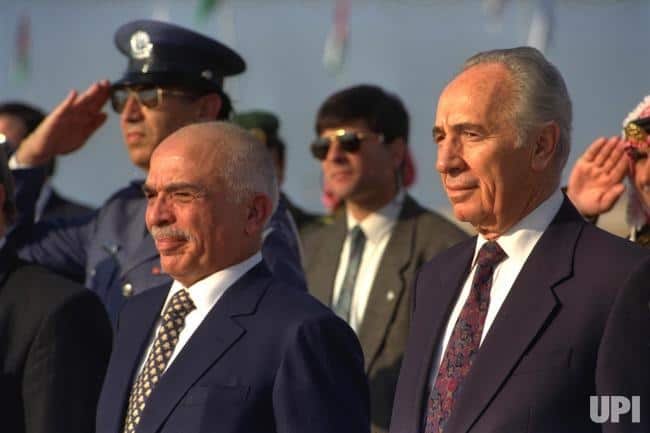
King Hussein was able to address the basic issues in his nation by negotiating a peace treaty between Israel and Jordan in 1994, despite his bad reputation stemming from his close relationship with Saddam Hussein. Representatives from both nations signed the peace treaty in Washington, DC on July 25, 1994, which served as the cornerstone of Jordan’s current stability. This agreement marked the conclusion of a 46-year-old conflict between the two nations.
Notwithstanding the challenges he faced, King Hussein managed to survive the tumultuous forty years of the Cold War and the Arab-Israeli conflict. Jordan’s stability and modernity have been facilitated by his ability to negotiate the demands of Arab nationalists, the Soviet Union, Western nations, and Israel. In 1999, King Hussein passed away, and his son, Abdullah II bin Al-Hussein, currently occupies the seat of power in Jordan.

Leave a Reply