Africa is the world’s second-largest and second-most populous continent, just after Asia. With a vast landmass of approximately 30.3 million km², including adjacent islands, it covers 6% of the Earth’s total surface area and 20% of its land area.
Another interesting fact about Africa is that it has the youngest population in the world, with an average age of 19 years. While every other continent’s population is ageing, with the median age in Asia and South America being 31 years old, and Europe, North America, and Oceania being even older, Africa continues to grow. By the end of the 21st century, it is projected that Africa will be home to approximately 40% of the human population.
The significance of these demographic trends cannot be overstated. As the world grapples with an increasingly complex and interconnected set of challenges, Africa’s growing population and economic influence will inevitably shape global outcomes. Despite its immense contribution, Africa has been neglected, underrated, and marginalized in international decision-making, particularly in the United Nations.
Since the UN Security Council was formed in 1946, Africa has been underrepresented in global governance structures, from the security council to international financial institutions. In fact, the United Nations only considers the issues of Africa when there is a humanitarian crisis.
Over the years, conflicts, emergencies, and geopolitical divisions have had a massive effect on the African continent. Nearly half of the global conflicts on the UN Security Council agenda pertain to Africa, yet the continent remains underrepresented.
Ironically, despite being subject to all the world’s problems, Africa is still left out of the equation when it comes to finding solutions. As things stand, the United Nations has no permanent voice for a continent with over a billion people and a growing population that makes up 28% of the membership of the United Nations.
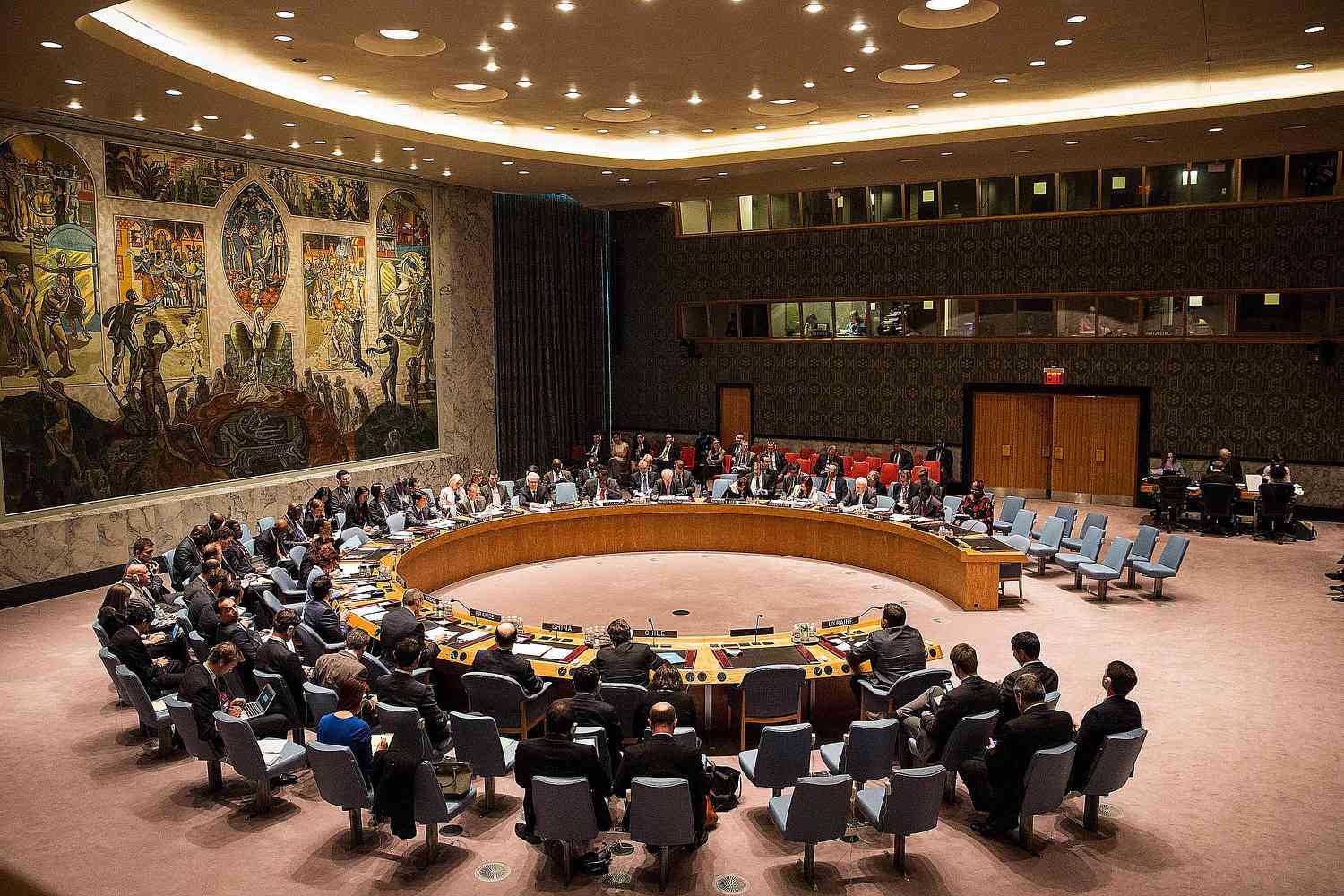
The United Nations Security Council is the world’s leading security body, composed of five permanent members and ten temporary members, who are rotated each year by the general assembly. The Permanent Members are the United States, the United Kingdom, France, China, and Russia.
These five countries have the coveted veto power and a say on global security issues because of their permanent membership power. They also have the power to make Security Council resolutions, such as adding new member states to the United Nations or choosing a Secretary-General.
If you examine the geographical locations of the five permanent members of the United Nations, you will notice that they are mainly located in North America, Europe, and Asia. The United States represents North America, China represents Asia, the UK, and France represent Europe, while Russia represents Europe and Asia. Only three out of six continents have permanent members, and Africa, which is the second-largest continent in the world, continues to be left out of the equation.
You might recall that the United Nations was established in 1945. In the same year, the majority of Africa was colonized by European nations, resulting in the African people being technically represented at the United Nations by their colonial masters. It has been 79 years since the establishment of the United Nations, and the world has experienced significant transformations. Despite this, the United Nations Security Council continues to delay its efforts to expand its membership to nations that deserve representation.
The fact that Africa continues to lack representation in the United Nations Security Council is a shame and infringes upon both the principles of fairness and inclusion. This situation is contrary to the fundamental principle of sovereign equality among nations as enshrined by the United Nations.
The UN Security Council can’t seem to reform itself because every previous attempt at reform, whether about its size, membership, or the powers it gives its members, has been a slow process for over three decades.
Any reform to the Security Council would require the agreement of at least two-thirds of the United Nations member states. This is the root cause of the problem. To reflect the world as it is now, there needs to be fairness, better representation, and an end to the United Nations’ old-world outlook.
Africa should be given a permanent seat in the UN Security Council because it is a logical thing to do. We must all play a part and fulfill our obligation by advocating for a change to the outdated UN Security Council policy that has intentionally hindered the representation of Africa.
The reality is that Africa is a vast continent with a growing population and cannot only be considered a place for Western exploitation. The time has come for the continent to have a prominent role in shaping major decisions.
Leave a Reply