
There are few events in contemporary history that are as tragic and heartbreaking as Belgium’s genocide in Congo and Germany’s genocide in Namibia But nothing can be more disturbing than what happened to the Tasmanian aboriginal people.
This is yet another unfortunate tale in the history of humanity that reveals man’s inhumanity towards another. Over a 27-year period of British colonization, nearly the entire native Tasmanian population was wiped out. By 1830, only two surviving Aboriginal Tasmanians were left living on the Island.
Early History of the Tasmanian Aboriginal people
The Aboriginal Tasmanians were once an indigenous population of the southern part of the Australian island of Tasmania. Before contact with Europe, they were divided into different ethnic groups and clans. Historically, the Tasmanian Aboriginal people were known for speaking languages that were unintelligible to the indigenous peoples on the mainland. The island was divided between several peoples who spoke various dialects, each with a specific hunting territory.

Tasmanian ancestors likely settled on the island around 40,000 years ago, becoming isolated from the Australian mainland by rising sea levels around 6000 BC. The indigenous people, who referred to themselves as ‘Palawa’, believed this term originated from a creation spirit who formed the ‘first man’ from a kangaroo. This spiritual connection to the kangaroo shaped their Palawa identity, linking them to their ancestral land through kinship obligations with Tarner, a creation spirit and ancestor.
The Palawa were skilled hunters and gatherers, sourcing food from land and sea. They hunted animals, collected shellfish, and foraged vegetables, securing daily sustenance. Seasonally, they moved in family groups of 15 to 50 people, inhabiting the interior’s open forests and moorlands in warmer months and coastal areas in colder months. Hunting was a communal affair, accompanied by music, dance, and storytelling. The Palawa were also skilled craftspeople, producing wooden spears, waddles, and flaked-stone tools and weapons.
Before the arrival of the British in Tasmania during the 17th to 18th century, it was reported that the population of Tasmania ranged from approximately 3,000 to 10,000 individuals. Within a period of three decades, those figures experienced a dramatic decline. For example, Geoffrey Blainey, an Australian historian, wrote that by the year 1830, the majority of the population in Tasmania had died due to illness.
However, war and private violence also contributed to their decline. Henry Reynolds, an Australian historian, attributed this depletion to the genocide committed by Britain, which was known as the Black War. Many historians who study colonialism and genocide, like Ben Kiernan, Colin Tatz, and Benjamin Madley, agree that the Tasmanian massacre was a full genocide according to Raphael Lemkin’s definition in the United Nations Genocide Convention.
The Arrival of the British on Tasmanian soil and the violence that erupted
A small British military outpost at Risdon Cove on the Derwent River, near present-day Hobart, marked the beginning of a significant European presence in Tasmania. European settlers frequently invoked the principle of Terra Nullius, a term meaning “territory without a ruler,” to justify claiming land for resources. This concept held that land, if not explicitly owned by a recognized ruler or kingdom, was considered open for the taking. Notably, this mindset deliberately disregarded the rights and existence of indigenous populations.
By 1830, 24,000 British settlers lived in Tasmania, occupying about 30% of the island’s ancestral lands, primarily in the midlands, east coast, and north. As they established agricultural lands, Tasmanian Aboriginal people were displaced from their homelands and hunting grounds, leading to food scarcity. Reports emerged of British settlers treating the Palawa poorly, including abducting women as domestic servants and killing them for sport.
The British motivation stemmed from a desire for land, resources, and control, fueled by misconceptions about the indigenous population. The British viewed the Palawa as a threat, fearing they might resist colonization. Many believed the only solution was to remove them, either through violence or confinement.
In response to British oppression, Tasmanian Aboriginals launched a resistance movement, using guerrilla tactics to reclaim their land. They targeted British farms and properties, striking quickly and retreating. The British viewed these attacks as a declaration of war and responded with force, deploying additional soldiers to suppress the uprising. A notice was issued allowing settlers to target Aboriginal groups deemed hostile, escalating tensions. The conflict intensified, with the British determined to crush the resistance and the Palawa determined to defend their land.
In 1827, tensions escalated into violent clashes, claiming lives on both sides. Aboriginal warriors from the Big River, Oyster Bay, and North Midlands nations killed several British stock-keepers, prompting retaliatory raids that left scores of Palawa dead. Further violence erupted when Kikatapula, a prominent Tasmanian Aboriginal leader, threatened a British farm overseer. The British responded with force, deploying soldiers from the 40th Regiment, who killed 14 Palawa and captured nine others, including Kikatapula.
In April 1827, two British shepherds were killed on a farm near Mount Augusta, south of Launceston. In response, a group of British soldiers and a pursuit party raided an Aboriginal camp at dawn, resulting in the deaths of 40 Aboriginal men, women, and children. In May 1827, an Oyster Bay group of Aboriginals killed a British stock-keeper at Great Swanport near Swansea.
British soldiers, police officers, and civilians responded by attacking an Aboriginal camp, leading to the deaths of at least six people. In June 1827, a reprisal attack on three British stockmen led to the deaths of between 80 and 100 members of the Pallittorre clan from the North nation.
In September 1827, the British appointed 26 field police officers and 55 soldiers to Aboriginal districts in Tasmania. This deployment was followed by an increase in violence, with reports indicating a death toll of 350 in Aboriginal settled districts. In January 1828, the British leadership in Tasmania proposed relocating Aboriginal people from their settled areas to a remote region on the North-eastern coast, citing the goal of protecting them and promoting “civilization”.
The Aboriginal people refused, and talks broke down.Subsequent violence between Aboriginal people and British settlers led to escalating tensions. The British authorities authorized settlers to use force to drive Aboriginal people from their lands, if necessary, to relocate them to a designated settlement area.

In the winter of 1828, some Aboriginal people left their lands for a designated area due to British pressure. Others refused and were met with force by British troops. In July, 16 Aboriginals from Oyster Cove were killed by the British 40th Regiment. This event contributed to ongoing tensions, with Aboriginal groups retaliating by raiding British stock huts between August and October 1828, resulting in the deaths of 15 British settlers.
The British authorities responded with significant force, leading to a period of intense violence. Historical records describe this as a devastating period for the Tasmanian Aboriginal population.
The Mass Murder of Aboriginal people in Tasmania
Martial law was declared in Tasmania by the British authorities in November 1828, lasting over three years. During this period, British soldiers and settlers engaged in violent conflicts with Tasmanian Aboriginal people, resulting in significant casualties.
Reports indicate that many Aboriginal people were killed, and the population declined sharply. By the end of martial law, approximately 800 Aboriginal people remained, primarily located in remote regions of northern and southern Tasmania.The events of this period had a profound impact on the Tasmanian Aboriginal community, marking a significant turning point in their history.

In March 1829, British soldiers conducted a dawn raid on northern and southern Tasmania, forcing Aboriginal people to surrender. Those who resisted were executed, while others were sent to a camp on Flinders Island. Around 300 Aboriginal people were transferred, and many died due to neglect, illness, and poor living conditions.
The camp’s harsh conditions, combined with disease and psychological trauma, led to a significant decline in population. By 1847, only 40 Aboriginal people remained, and by 1876, Truganini, considered the last Tasmanian Aboriginal person, had passed away. The Tasmanian Aboriginal population declined drastically, resulting in the loss of their traditional way of life.
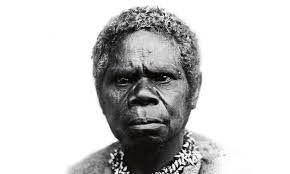
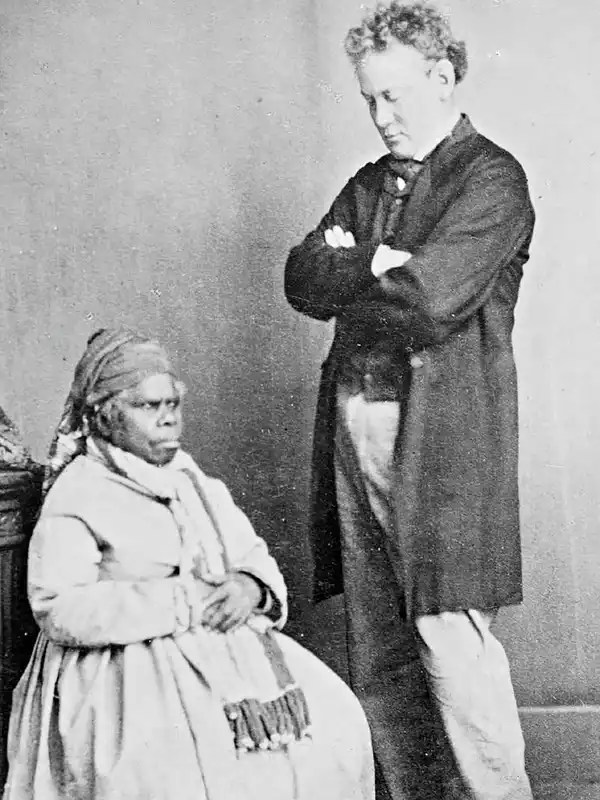
Furthermore, Fanny Cochrane Smith, who was of mixed heritage and was the last known speaker of the Tasmanian Aboriginal language, died in 1905. Both of their tragic deaths brought to an end the existence of the Tasmanian Aboriginal community.

It was only in April 1976, approaching the centenary of her death, were Truganini’s remains finally cremated and scattered, according to her wishes. As if that weren’t enough, in 2002, her hair and skin were found at the Royal College of Surgeons of England and transported to Tasmania for burial.
Conclusion
Contrary to the belief that the Tasmanians were primitive people who would die out because they were separated from the mainland for 10,000 years, they actually flourished and grew in number until the British arrived. This dark period in Tasmania’s history is a stark contrast to Australia Day, which celebrates the arrival of the British in Australia. Although this day may be a day of celebration for some, it also serves as a reminder of the tragic extermination of the Tasmanian Aboriginal people.
To make matters worse, Britain, the perpetuator, has refused to openly apologize or offer reparations to some of the Australian aboriginals who are still in Australia. Instead, they have been enabling their stooges in the Australian government to enforce societal and institutional discrimination against them. What is even more disheartening is that there is no global commemoration of the genocides that Europe committed against indigenous black people globally.
Sources
- List of multiple killings of Aborigines in Tasmania: 1804-1835 | Sciences Po Violence de masse et Résistance – Réseau de recherche. (2008, March 5). https://www.sciencespo.fr/mass-violence-war-massacre-resistance/fr/document/list-multiple-killings-aborigines-tasmania-1804-1835.html
- Berk, Christopher D. (2017). “Palawa Kaniand the Value of Language in Aboriginal Tasmania”. Oceania. 87 (1): 2–20. doi:10.1002/ocea.5148. ISSN 0029-8077.
- OpenLibrary.org. (1967). Daily life and origin of the Tasmanians. By James Bonwick | Open Library. Open Library. https://openlibrary.org/books/OL5531758M/Daily_life_and_origin_of_the_Tasmanians.
- Lawson, Tom (2014). The Last Man: A British Genocide in Tasmania. I. B. Tauris. ISBN 978-1-780-76626-3.
- Companion to Tasmanian history. (n.d.). https://www.utas.edu.au/library/companion_to_tasmanian_history/index.htm
- Harman, K. (n.d.). Explainer: the evidence for the Tasmanian genocide. The Conversation. https://theconversation.com/explainer-the-evidence-for-the-tasmanian-genocide-86828
- The Editors of Encyclopaedia Britannica. (2024, August 1). Tasmanian Aboriginal people | History & Facts. Encyclopaedia Britannica. https://www.britannica.com/topic
Leave a Reply