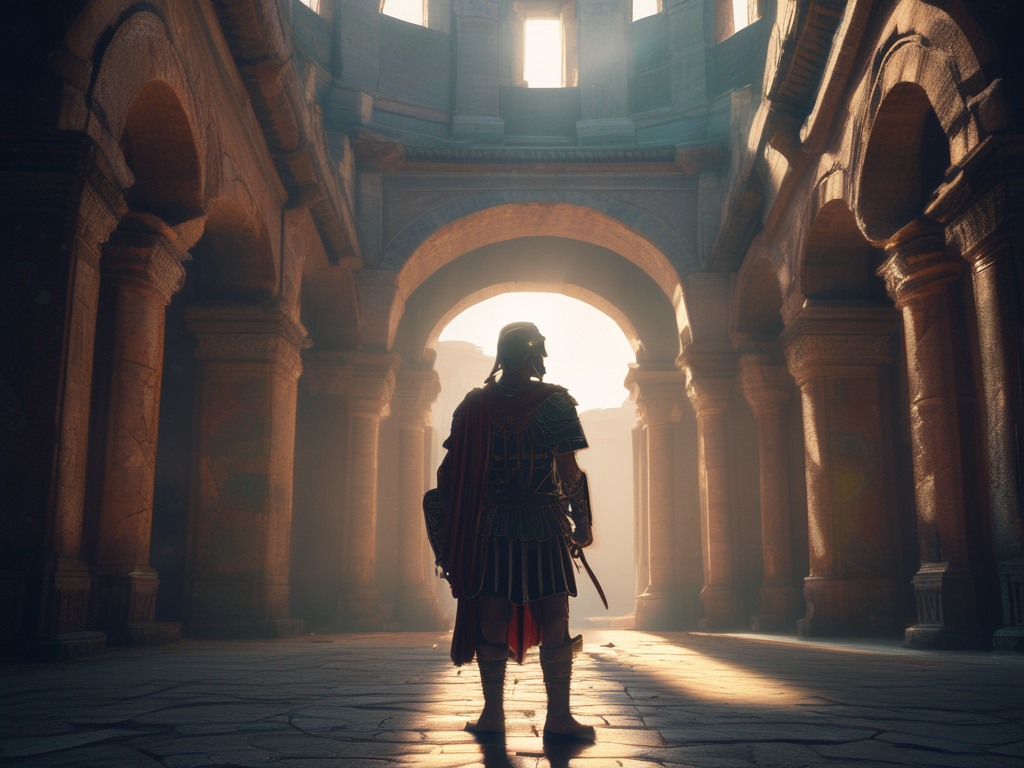
When the Roman Empire was at its apex, its military might and dominance in almost every part of the world made it impossible to defeat. The Roman army was so powerful and large that it was able to fight off all of its territorial rivals and even the ones beyond it. This once-mighty empire established a complex military state, which ruled regions from Ancient Egypt to Spain to England, as well as modern-day Iraq. The apparent enduring dominance of the Roman Empire was, in turn, relegated to obscurity, even among those whose ancestry was closely tied to it.
The most interesting question historians have is why the Roman Empire fell. There are many theories regarding why Rome fell. Did it encounter an enemy that was too formidable to defeat? Could the cause of the fall be attributed to an internal conflict within its ranks? Or was it simply a case of excessive slenderness? The surprising conclusion is that none of the options above could explain why Rome fell. In fact, the fall of Rome was caused by a hundred years of greed and a desire for power and control, which led to its downfall.
Through the assassination and subsequent prosperity within the Empire
To understand how the Roman Empire fell, we must first look at its beginnings as a small republic with a significantly smaller territory. The Roman Republic started in 509 B.C.E. when the last king of the Etruscans who ruled Rome was removed. Rome’s next government was a republic, which is a form of representative democracy. At first, wealthy families in Rome called the patricians were in charge and could only hold political or religious positions. Except for the patricians, all others were regarded as plebeian (members of the general citizenry) and were prohibited from holding office or any position of power.
Over the course of nearly 200 years, the plebeians fought for and gained power in the government. The Senate was the main part of the Roman Republic. The Senate gave advice on matters related to rules governing the city and population. When Rome was still a republic, members of the patrician class advised other governing bodies. Even though the Senate didn’t actually make laws, its members were significant and had a big impact on Rome’s laws. The Senate was the only body in charge of the republic for a short time. It started in 509 B.C.E. and ended in 494 B.C.E when the plebeians planned a strike. This led to the creation of the Concilium Plebis, or the Council of the Plebs.
The plebeians had a voice in the government thanks to this movement. Because of this, new legislative bodies were formed in the Roman Republic called assemblies. These legislative bodies had the following power:
- Comitia Centuriata: This body made decisions about war, passed laws, elected magistrates (consuls, prosecutors, and censors), considered appeals of capital convictions, and conducted foreign relations.
- Concilium Plebis: This body elected its officials and formulated regulations for the observance of the plebeian class. In 287 B.C.E., it acquired the authority to make all regulations binding for the entire Roman community.
- Comitia Tributa: The tribal assemblies, which were open to all citizens, elected minor officials, approved legislative decisions often on local matters, and could wield judicial powers, but could only levy fines instead of administering punishment.
The republic had two consuls, who were chosen by legislative assemblies. For a year, they were responsible for the Roman Senate and the Roman army. Though their power was partly limited by the establishment of other magistrate positions, these consuls were effective heads of state. The Roman Republic remained steadfast for several centuries despite its internal divisions. But as Rome’s power and territory grew, more internal conflicts began to emerge as citizens and families fought for power.
For instance, during the 1st century B.C.E., the renowned Roman orator Marcus Cicero discovered a scheme by a Roman senator, Lucius Catiline, to overthrow the Roman government. Some citizens, such as the Gracchus brothers, attempted to introduce government and social reforms to help the poor. Eventually, factions formed, loyal to either the patrician or plebeian classes or to a specific military general, and hostilities started. A series of civil wars followed.
After years of fighting and Rome being a monarchy state, one man was willing to change things. His name was Julius Caesar, a prominent general and statesman who later became the perpetual dictator of Rome during the mid-first century BCE. Julius Caesar began to gain significant power in the Republic and went on to establish himself as a popular and efficacious ruler, who won numerous military campaigns. Caesar’s popularity was so great that he even earned the trust of his soldiers, and he was able to accumulate substantial wealth after acquiring the province of Gaul.
Concerned with Caesar’s emerging influence, the republic Senate demanded that he give up command of his army and return to Rome as a citizen. Caesar, however, refused, instead marching his army south directly into Rome. Because of this, another civil war broke out between Caesar and his chief political rival, Pompey. Caesar triumphed and was given the title of dictator for life. Previously, the designation of dictator was bestowed upon an appointed and temporary leader during times of military necessity. Other leaders within the republic were wary of Caesar because they feared that he would become a tyrant with this new title.
To prevent this, a group of senators organized and executed his assassination, resulting in one of the most significant political issues in Roman history. After Caesar died, Octavian (later given the title of Augustus), his nephew and heir, defeated a group of senators who had killed his uncle. In Caesar’s will, he officially adopted Octavian as his son and designated him as his principal heir. Octavian was given the title of Augustus, which guaranteed him perpetual rule and prevented anyone from attempting to challenge his authority. Following this decision, Octavian became the first Roman emperor.
The assassination of Julius Caesar caused a significant political crisis throughout the entire region. Caesar would not be the last emperor, as the conspirators who feared his role as dictator had inadvertently sparked the rise of Rome’s first emperor. Octavian continued his father’s legacy by acquiring nearby territories, including Egypt. This ended the Hellenistic era. Octavian became more powerful and influential than his father, Julius Caesar. As a result, the Roman Senate was influenced to respond accordingly.
During the civil war, many prominent politicians attempted to take advantage of the political turmoil in Rome by assuming power. From that point onwards, Rome adopted a pluralistic system of monarchy with a succession of dynastic leaders, both good and bad. Furthermore, it went on to develop a hunger for conquest that eventually led to the conquering of much of Europe, Asia, and Africa.
As Rome emerged as the primary administrative hub of the empire, the remaining territories were subdivided into provinces, each of which was governed by a distinct local governor. It became impossible for a single leader to exercise complete control over all territories due to the growing dominance of the Roman Empire. As long as the provinces paid their taxes and did not cause any problems with the emperor, the empire maintained a certain degree of autonomy within the provinces.
Read more: History of the Roman Empire: The reign of King Romulus, Titus Tatius and Lucius Tarquin
This system appeared to work for the Roman hierarchy, as the empire remained stable for two centuries and experienced a period of prosperity. This period in the history of the Roman Empire was referred to as the “Pax Romana,” and it witnessed unprecedented peace and economic prosperity. It is believed that the Empire encompassed a considerable area, spanning from England in the north to Morocco in the south and Iraq in the east.
The beginning of the Roman’s Empire’s decline
Despite the apparent progress of the Roman Empire, a brewing conflict was evident beneath the surface. Religious tensions began to erupt during the first century CE. Many Roman citizens worshipped Jupiter, the main god of the pantheon. Some believed it was closely related to the Greek god Zeus. This religion of the ancient Near East was known for its elaborate temple architecture and esoteric stories about gods who were small and human.
In ancient Rome, stories of Jupiter’s battles with human women and the gods’ vengeance for minor grievances became a popular myth. But when Christianity arrived in Rome, everything changed. This new Abrahamic faith was based on the persecuted faith of Judaism, which was inspired by the teachings of the Jewish rabbi known as Jesus and his eventual crucifixion by the Roman authorities.
Christianity gradually gained popularity in Rome and was held in high esteem, and it was beginning to garner some recognition. The Roman Empire considered every new faith, including Christianity, to be an immediate threat to its establishment. It is widely acknowledged that religion represents one of the most challenging institutions to eradicate. The relative absence of conflict and the small number of Christians during the early years of the empire suggest that a prudent emperor would have prioritized maintaining the empire’s stability over persecuting religious believers.
However, when you have a monarchy running a country, you usually rely on someone who was chosen based on their birth order and genetics, rather than on their leadership qualities. This was the situation with the leadership type in Rome. Several leaders later on committed the same mistake that even a toddler could understand that the fall of the empire was imminent. Commodus, who became the new emperor, would soon gain a reputation for this very reason.
Commodus was just 15 years old when his father, Marcus Aurelius, made him co-emperor and named him his successor, even though the young man was not good enough for the job. The early historian Aelius Lampridius wrote that even from his earliest years, he was base and dishonourable, cruel and lewd, defiled of mouth, moreover, and debauched. As the youngest emperor ever, Commodus, rule was dictated by his emotions, which led to total recklessness. It was a case where a teenager made bad decisions when he was given too much power. Since he was inheriting the empire that his predecessors had built, it was hard for him to ruin the important things. But when he arrived in Rome, he quickly caused chaos.
Commodus was known for his erratic leadership style and his love of gladiator matches. He often took part in duels himself, which meant that anyone who faced him would have to die quietly, since he was an emperor and it was a crime to kill him. Commodus established a cult of personality around himself, and his reign was so chaotic that he would eventually be immortalized by Joaquin Phoenix as a villain in the Oscar-winning film, Gladiator.
As everyone expected, his reign ended in the way everyone thought it would. After leading Rome for fifteen years, his advisors had him killed by a famous wrestler on December 31, 192. The Senate elected a new emperor, Publius Helvius Pertinax. The subsequent appointing of this new emperor inaugurated the era of the Five Emperors. After the demise of Commodus, Pertinax was proclaimed emperor and would die within three months of taking office. This triggered chaos in Rome. The chaos was quelled when Septimus Severus and Clodius Albinus ruled simultaneously despite their opposing views.
The political climate in Rome was chaotic and anarchic, and soon, outside observers started to see its weaknesses. Many parts of Rome had their cultures and were independent for a long time. As the Roman government degenerated into anarchy, certain provinces began to fear the imminent demise of the empire, and they began to contemplate secession from Rome. As the Romans struggled through a series of weak and inconsequential emperors, provinces began to break away at an alarming rate. The Gallic empire was the first province to break away, taking most of the territory to modern-day France and England.
After the Garlic Empire, the Palmyrene Empire was the next to leave the Roman Empire. Led by Queen Zenobia, the Palmyrene Empire took control of much of Egypt and the eastern coast of the Mediterranean, including many key sites in the holy land. This collapse was the biggest crisis in Rome’s history, but it will be remembered because it brought many changes. In the third century, a succession of three emperors would end this crisis, yet the Roman Empire that emerged from it would not be the same.
It all began with Emperor Aurelian, who only ruled for five years but made a big difference. When the Roman military was under attack by barbarian tribes and internal strife, it seemed that the Roman Empire was approaching its end. Emperor Aurelian, however, who had a thorough understanding of military operations, conquered hostile tribes and took control of both the Palmyrene and Gallic empires. His three main ideas for improving Rome’s fortune were to surround Rome with strong walls, leave provinces that were too difficult to keep, and improve Rome’s economy. Under Aurelius short rule, Rome started to look more like it did at its best. His successors would build on what he had accomplished, starting with Diocletian and then Constantine the Great.
One of the most successful periods in the empire’s history was Constantine the Great’s thirty-one-year reign. Constantine’s success was attributed to his accomplishment of three crucial objectives, namely the introduction of a novel currency, the expansion of the empire’s territory, and the restructuring of the Roman army. He was also referred to as the emperor who transformed the Roman Empire into a Christian state, resulting in his conversion to Christianity, which many believed he established. The legend goes that Constantine converted to Christianity after claiming to have seen a cross in the heavens. This is the reason the cross is considered an integral symbol in Christianity.
During the reign of Emperor Constantine, a significant number of Roman citizens converted to Christianity, resulting in the rise of Christianity as a global power religion. Despite numerous successes, Constantine’s reign was marred by a host of challenges. Many people backed his decision to give the Catholic Church considerable power in Rome, but some were concerned about the emergence of a Christian-ruled empire. Many people at that time thought that Christianity was becoming a cult because they had complete control over the empire.
Those who were against the government in Rome during the time of Christian rule were killed on the cross, and their property was given to people who supported the government. The hiring of mercenaries for the wealthy and the persecution of the poor were two examples of the corrupt practices that plagued Roman soldiers’ behaviour despite their high pay. Corruption was going unpunished in the empires, which led to this flourishing.
After Constantine’s death, the throne of the empire was once again up for grabs, resulting in numerous disputes over who would be able to assume power. The three sons of Constantine ruled together at first, but chaos soon ensued and Rome found itself embroiled in yet another civil war. As the fall of the Roman Empire became more apparent to even the blind, a nomadic people hailing from a distant continent emerged as the latest threat to the empire. This group of nomadic people were none other than from the Hun empire. It is thought that they were a group of people who lived in Central Asia, the Caucasus, and Eastern Europe in the 4th and 6th centuries AD.
Most scholars think that they were more than just nomadic people. In hindsight, they were believed to be ferocious warriors who had been conquering Asia and Eastern Europe for ages. The Huns were so fierce that members of other tribes, mostly barbarians, would flee their homes to avoid their wrath. The Romans faced a large influx of displaced people, mainly barbarians who had come to seek safety from the Huns invasion. Despite all effort to curb the massive inflow of refugees, Rome still lacked the necessary personnel to oversee its border regions.
You would have thought that the Romans would have picked a few skilled refugees and used their natural desire to fight to make them part of their army. Instead, some corrupt Roman officials exploited the refugee populations, assuming that such developments would not be necessary for Rome.As time passed, the Romans began to face many refugees outside their borders, some of whom were trained warriors. The refugees were fed up with the Romans’ inhospitable behaviour and immediately took up arms against them. They were soon joined by other refugee tribesmen, and what began as a refugee crisis quickly turned into a guerilla warfare. Rome may have had superior military forces, but its cities were scattered, and its forces were unable to effectively engage the invading forces.
The escalating crisis outside of Rome’s borders didn’t affect the elite within the city, as they were shielded within their walled communities. They were not convinced that the crisis would become a full-blown attempt to take over the empire. While the empire ignored the growing crisis within its borders, the Goths quickly gained territory and took over land from former Roman subjects across the Balkans. Despite the possibility of Theodosius, the emperor during the crisis, neglecting this matter excessively, he was determined to restore order within Rome’s borders.
Theodosius made significant efforts to restore Rome’s military to counter the internal rebellion. However, he encountered a significant obstacle in restoring the military’s finances, which were beginning to appear strained after decades of patronage under his predecessors. He decided to devise a strategy for raising funds for strengthening Rome’s military. He tried to raise money by increasing taxes, but this approach was met with resistance from the subjects he ruled.
Many of those who were against the tax increase plan were Christians or other religious beliefs. Theodosius was faced with a series of new rebellions within the West, which sought to end his rule. However, this did not hinder his efforts to keep Rome’s wall safe. Due to the military insights of Theodosius, Rome emerged victorious and demonstrated its dominance as the most powerful empire in the world.
But things would change when Theodosius died in 395 CE. There was no one to replace him. His sons Arcadius and Honorius would each rule the eastern and western halves of the empire, but neither of them were a good leader, so their minsters took over. This made the empire’s two parts split apart. One of them was Emperor Arcadius, who took control of the eastern part of the Roman Empire. The capital of his empire, Constantinople, flourished during his reign. The other son, Honorius, took control of the western part of the Roman Empire. This would be the biggest loss of territory for Rome yet, and there would be no turning back. The two halves of the divided empire would last another thousand years, but they won’t attain the legendary status of the Roman Empire. Rome still dominated much of the Empire, but its days as the center of power were becoming shorter.
The Fall of the Roman Empire
As Rome began to crumble, the Hun empire was gaining momentum, and Attila, the ruler of the Huns, was regarded as one of the most feared military leaders of all time. He now focused on capturing Rome and ending its dominance over the world. His latest plan would be to deal a devastating blow to the Roman Empire with a thousand cuts.
Over the next eighty years, the Roman Empire faced many challenges, including brutal attacks by the Huns on its fringes and the Gothic population throughout the empire. Massive reorganizations weakened the Roman army, and it became a shadow of what it once was. There were times when Rome would find itself in a show of retreat during battle. Rome became less powerful and more like a city that was getting smaller as more parts of the Roman Empire broke away.
Over time, many emperors tried to make the Roman army stronger, but none of them could make it strong enough to take back a lot of territory they lost. The Roman Empire encountered numerous obstacles until 476, when an ambitious king decided to terminate its existence. That king would be Odoacer, the first barbarian king of Italy, who would become one of the most important figures in history who was forgotten.
Romulus Augustulus was the last emperor of Rome during the period when Rome was in danger of extinction. He was a distinguished young ruler; however, he was only 16 years of age and was inexperienced. When Odoacer invaded Rome, Romulus bravely fought the barbarian king, but he was unable to defeat him. The barbarian king was impressed by his bravery and instead treated the young king Romulus Augustulus with surprisingly leniency during his assassination of Rome. Instead of executing Romulus, Odoacer exiled him and left him in the care of his relatives, even giving him a pension, before establishing himself as the supreme ruler of Italy. This historical event would be described as the fall of the Roman Empire.
Many historians considered Odoacer to be merely a foreign occupier after he ruled the remaining portion of the Roman territory. Even the Senate of Rome did not consider him a legitimate ruler, and instead awarded the seal of Rome to its other eastern empire, the Byzantine Empire. It was this way that the Roman Empire established its presence in European history.
Conclusion
The absence of strong leadership was one of the biggest issues with Rome in the final days before its demise. As I mentioned earlier, the position of Roman emperor was not awarded based on merit. The position was handed down through inheritance, which attracted a wide audience throughout Rome and beyond, as it was solely an appointed position with a lot of authority. To be the best leader in Rome, you had to take risks instead of being excellent at it.
For a duration of 75 years, twenty-seven men held the position of Emperor in Rome. The most common way for rivals to get rid of each other was to use a knife between the ribs. This was how the Romans defined and refined their leadership style. Even when an emperor was in charge for a long time, they turned the empire into their personal property by putting their key allies in strategic positions. When tensions escalated, the Emperor’s bodyguard or praetorian guard frequently took matters into their hands and executed the Emperor. The Roman Empire had a long and distinguished military record of winning without causing trouble or bloodshed. The decline in military effectiveness was evident when the Roman army began to assume a more authoritative role within the Roman government, instead of inventing fresh tactics for settling major disputes.
When the Goths came calling after being pushed out of their territory by the Huns, the Roman military was not formidable enough to maintain its borders. If the military had been adequately prepared for future incursions, it is probable that they would have been capable of defeating the Gothic armies and safeguarding their territory. The Romans ended up opting for a gentler approach to ward off the Gothic invading force and defend their territory.
Another reason why the Roman Empire fell was because the Romans didn’t help the Goths who were refugees. It would have been beneficial to the Roman army to provide shelter to the Goths, which would have encouraged their future warriors to join the Roman army. Instead, they exploited them and employed them for trivial issues, without allowing them to develop loyalty to the empire. This led to constant civil wars and small military fights, growing tensions, and a slow but steady loss of territory. A second critical factor contributing to Rome’s downfall was the absence of democracy, which rendered leadership a game of cat and mouse. With such an exemplary leadership style and pattern, it was obvious that the Roman Empire was doomed to fall.
On the positive note, despite the fall of the Roman Empire, its most powerful institution, the Roman Catholic Church, still enjoys considerable influence. The church was still in its infancy at that time, but its faith has grown rapidly throughout the world, with its seat of authority still at the Vatican. Today, even the most powerful individuals would respond to its summons, and only a select few would dare to challenge the pope’s authority. Even Henry VIII’s religion was incapable of dissolving the Roman Catholic Church when they refused to allow him to divorce. The Roman Catholic Church created a legacy that lasted longer than the Roman Empire when it fell.
Leave a Reply