As with many other parts of the world, the area now known as the Islamic Republic of Iran has undergone numerous name changes. But, among the numerous historical aliases it has, there is one particular name that stands out. The most notable of these is the Persian Empire. The current Iranian state was once referred to as the Persian Empire.
The term Persia was originally used to refer to the geographical territory of the Achaemenid empire, which was mistakenly believed to encompass the entire landmass. The naming convention of this particular empire is not surprising, considering that the individuals who adopted it often adopted similar names for their empires.

It might be interesting to learn that this was also where the name for the Iranian language, Farsi, came from. Additionally, you should know that the ancient Persians did not refer to the Persian Empire as Persia. At that time, it was often referred to as Ariya Ehran or Iranshahr, which translates to the “Aryans.” This was a very popular name among the people who lived there at that time.
Another interesting fact is that the present inhabitants of Iran are not closely related to the ancient inhabitants of Persia. The pre-Islamic Persia civilization included numerous individuals who are now residents of various nations, from Egypt to Syria to Afghanistan. This is the reason why people from Egypt, Syria, or Afghanistan frequently refer to Persia as their ancestral home.
In formal correspondence and everyday communication, the name of Iran has changed compared to Germany or China, which remain unchanged. As a result, two questions arise: when did this name change occur, and when did the majority of people begin to refer to Persia as Iran?
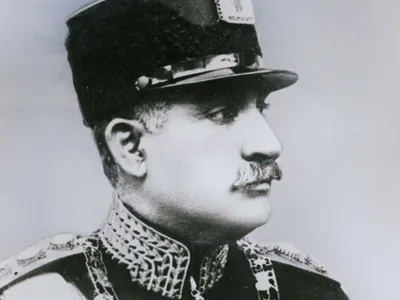
The recent shifts can be attributed to the then-Shah of Iran, Reza Shah Pahlavi, who was Iran’s ruler at the time. In the early 1930s, Reza Shah urged everyone to drop the name Iran and embrace the name Persia. The change in name was motivated by the desire to establish a more unified and centrally located country, but he was faced with the challenge of overcoming the resistance from the rest of the world to adopt the Persian name.
During the League of Nations, Reza Shah asked all the member countries to call his kingdom Iran. He reiterated that failing to comply would be deemed an outright violation of the sovereignty of his nation. The decision to change the name of his country from Persia to Iran was supported by the United States and Nazi Germany, but the United Kingdom was opposed to the idea.
The Iranian government ignored the British one-sidedness of the British administration when it came to identifying Iran as a sovereign entity and decided to move forward with its plans to transform its financial system by making some major changes.
The major shift involved the change of the name of the British state-owned oil company, the Anglo-Persian Oil Company, to the Anglo-Iranian Oil Company. Despite this, it was still referred to as Persia at the heart of the international community, especially issues involving the British government. The British government’s excuse at the time was that changing the name from Persia to Iran would often misinterpret the country’s identity as a misspelling of a variation of Iraq, resulting in misinterpretations of correspondence.
The arrival of Mohammed Reza Shah, the successor of Reza Shah, on an official journey to London, sparked another dispute, as he was expected to be awarded the title of Shah of Iran. However, Winston Churchill, the British prime minister at the time, was opposed to the new name and requested that it be reverted to its original form before he would recognize Mohammed Reza Shah as the emperor of Iran.
This incident provoked considerable discontent among Iranian diplomats and its government. Winston Churchill later instructed his ministers and military commanders to revert to Persian correspondence to avoid a mistake between Iran and Iraq, which could result in troops or supplies being sent to the wrong territory.
Mohammed Reza Shah, who would later become the shah of Iran, displayed a nonchalant rather than authoritative tone, expressing a lack of concern for the use of either Iran or Persia. Both names were permitted because he wished to establish friendly relations with the British government. The decision provoked widespread outrage among Iranian citizens, who were appalled by the Iranian leader’s willingness to yield to British pressure.
With increasing influence from Iran on the international stage, the name ‘Iran’ began to gain more power around the mid-1970s. The name change was largely accepted, and even the British government was forced to adopt the new name Iran instead of the previous name Persia.
The Persian Empire would lose its contemporary meaning in the aftermath of this event and would be only attached to an empire that existed for around 1400 years. Despite the increasing acceptance of the term ‘Iran’ among contemporary Iranians, there are still some scholars of Iranian history who believe that Iran should have remained Persia.
Photo by sina drakhshani on Unsplash
Leave a Reply