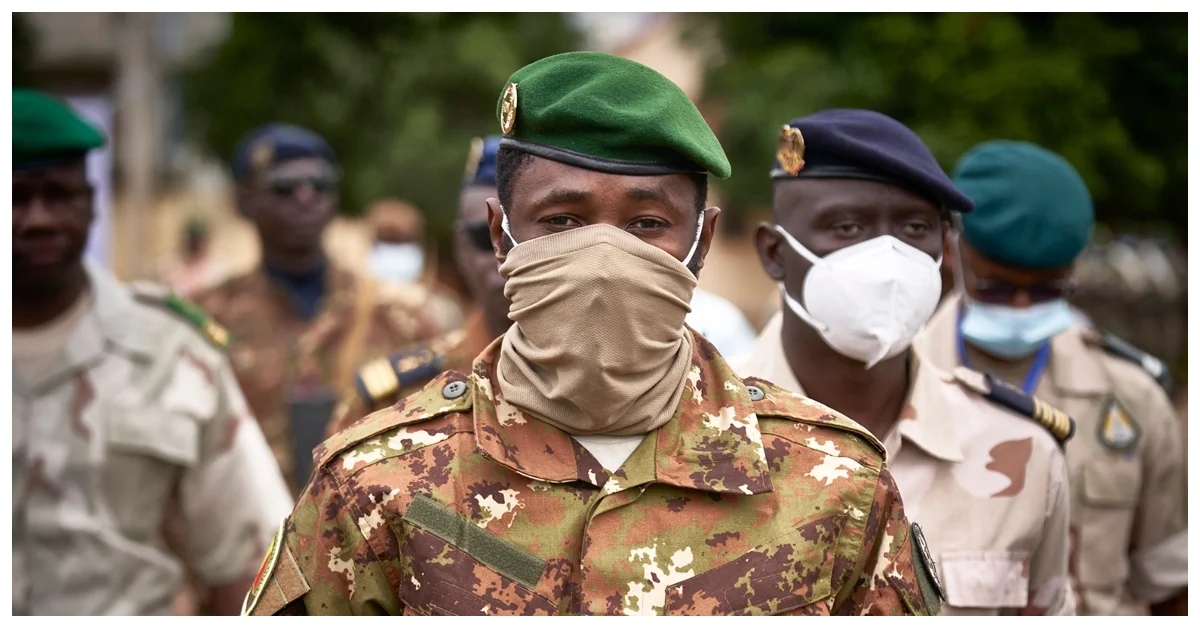
Since 2020, seven countries in West and Central Africa have experienced military takeovers, and the peculiarity of this phenomenon is that all of them were previously French colonies. In some of these countries, there has been a lot of unrest, and locals have been protesting against France.
These flurry of coups suggests that a fresh pattern of western power play is beginning to emerge on the continent of Africa. What internal and external connections can we make with the recent military coup in Africa, and why is France at the center of all this? Moreover, how does Russia play a role in this?
Before I continue, I want to provide you with a detailed overview of how events could have turned sour in the seven African nations affected by the rash of military coups. The seven African countries are Mali, Burkina Faso, Sudan, Chad, Guinea, Niger, and Gabon. At present, the military oversees these seven nations, as their respective militaries have displaced the civilian government, with Niger and Gabon being the most recent examples.
In a paradoxical turn of events, it has been observed that in all six nations, that the coup leaders have generally received widespread public support, despite the notion that they are solely motivated by the public interest. Many foreign observers have come to the conclusion that these coups may be a shrewd manoeuvre for western power play. It’s tough to draw sweeping comparisons that work for all six nations, but each one has its own unique set of circumstances.

For instance, in Gabon, the disputed re-election of its president, Ali Bongo, was the catalyst for their coup. Critics contend that, given his father’s long reign over the region, Ali Bongo was alleged to have rigged the election. When the coup finally happened, countless people gathered to mark the end of the Bongo era.

The situation in Niger is relatively different from that of Gabon. President Mohamed Bazoum, who served as the president of Niger before the coup, was, in fact, a leader who was elected through democratic means. His election in 2021 marked the inaugural civilian-to-civilian transfer of power in the country.
One theory suggests that the Niger coup was the direct outcome of a power struggle between some powerful juggernauts in the military and the presidency. It was revealed that Mohamed Bazoum was allegedly implementing modifications to the nation’s military leadership, and one of his generals, namely Abdourahamane Tchiani, reacted negatively towards him when there were rumours that his position was at stake.

The situation spiralled out of control, and a group of heavily armed soldiers, led by Abdourahamane Tchiani, detained President Mohamed Bazoum at his official residence in the capital Niamey. They then announced that they had seized power in a coup, citing the country’s deteriorating security situation. Shortly thereafter, General Abdourahamane Tchiani declared himself the leader of a new military junta in Niger.

When you look at the whole situation, you can see that there are differences between the different coups depending on where they happen and what’s happening in each country. However, there are also some common reasons for the recent waves of coups in West and Central Africa.
1. Leadership Failure as a result of corruption
There is a widespread agreement within Africa that the civilian governments of these countries were not delivering on their mandates. Consider that many of the countries affected by coups in Africa are some of the poorest in the world. The vast majority of these nations possess incredibly valuable natural assets that have yet to be utilized by their citizens, a theme that is echoed across the continent of Africa.
For example, Sudan, Gabon, and Chad have oil, Niger and Mali have uranium, and Guinea and Burkina Faso have a lot of gold and other minerals. Despite the abundance of resources and the substantial sums of money derived from them, the wealth has not been able to reach the common citizens of these nations.
The way the Democratic Elites in these nations have handled power has led to widespread dissatisfaction. Some have argued that the vast natural resources are merely protected by the ruling elites for their colonial masters, with France being identified as the main culprit. The underlying cause of all the coups in West and Central Africa is primarily attributed to economic stagnation, corruption, and persistent insecurity.
2. Insecurity
The security challenges these countries face are especially severe in Mali, Burkina Faso, and Niger. There are many factors that can be attributed to security concerns, including geography.
Some of these nations are in the “Sahel,” a geographical area that has over time become a haven for arming groups linked to Al-Qaeda and the Islamic State. According to a report by the Institute for Economics and Peace, almost half the deaths from terrorism around the world in 2022 occurred in the Sahel. That’s more than the number of terrorist attacks in all of South Asia and the Middle East.
As the security and humanitarian crisis continues to escalate in the Sahel, the populace has become increasingly dissatisfied with the incompetence and shortcomings of their governments. Some people believe that the government is deliberately allowing security concerns to get worse, presumably for their benefit.
Security concerns in these regions are among the factors that may lead the majority of Africans to endorse the notion of a coup that would usher in a military administration. It’s not surprising that the leaders of the coups in Mali, Burkina Faso, and Niger have cited the security situation as a reason for assuming power.
3. Anti-French Sentiment
The third and most significant factor contributing to the current wave of coups in West and Central Africa is the resurgence of opposition to France and its presence in the region. France, as we all know, is an old colonial power to so many African nations, so we’re talking about a relationship that’s rooted in a history of exploitation, one that goes all the way back to the 18th century.
Many people, especially Africans, feel that the exploitation hasn’t stopped and instead continues in new ways, a phenomenon sometimes referred to as neocolonialism. The practice of neocolonialism, which is practiced by France and other former colonial Western nations, involves the maintenance of an unequal relationship with their former colonies, with a primary focus on their own political and economic interests.
When examining the concept of neocolonialism practiced by France, one thought that often comes to mind is how French companies are heavily involved in extracting the natural resources of their former colonies. For example, France is involved in operating Niger’s uranium mines and getting the uranium it needs for its nuclear power plants back home. Despite the assertion that the export of uranium will generate revenue for the Niger government, the economic impact is still not felt by its populace.
If you look at the whole situation in Africa, you can see that there are too many things to think about. Most people in countries affected by coups are upset that France has a big impact on their country. Their previous leaders, who were elected to serve their interests, were seen to be romantically involved with France instead.
The vast majority of those leading the street protests in Niger, Mali, and Burkina Faso supporting the coup military regime are not doing so out of affection for them, but rather out of a sense of duty to protect their country from the invading hand of France’s neocolonialism. They blame their leadership for not trying to solve their problem, instead allowing France to exploit their resources through instability, while they remain in abject poverty.
Another factor contributing to the anti-French sentiment is the security threat in the Sahel, which I mentioned earlier in this article. France has been one of the main Western countries to send troops to fight the armed groups.
In 2013, France initially deployed soldiers to Mali, and achieved some success. Even with a few years of French involvement, things weren’t quite moving in the direction people had hoped. Sadly, much of France’s focus has been on counter-terrorism, which does not deliver much benefit to the local people. The local Jihadi groups have actually grown stronger as they’ve taken advantage of the locals. People have noticed this and are concluding that things have got worse since France’s involvement in battling terrorist activity in the area.
The majority of people in the region now hold the belief that France, despite its long history of involvement in the conflict, never had any intention of resolving it, but instead engaged in a double standard. Consequently, they feel that France is secretly fuelling these conflicts, and are attempting to benefit from them. Although there may be no proof to the contrary, many people throughout the region believe that. Many of the coup military leaders have also used this narrative to their advantage. They have firmly positioned themselves on the anti-French or anti-colonial side to win public support.
The military factions behind the coup simply saw which way the wind was blowing and have used anti-French sentiments to boost their credibility. French troops are currently being pushed out of Mali and Burkina Faso by coup leaders, and Niger seems to want to follow suit with a call for France to withdraw its one and a half thousand French soldiers.
How is Russia involved in this?
Russia has undoubtedly increased its influence in Africa more recently than any other external actor, and this can be attributed to many things. This includes deepening ties with North Africa, expanding its reach into the Central African Republic and the Sahel, and rekindling Cold War ties with Southern Africa. Even though China dominates Russia’s trade with Africa, it’s still a major player in the continent. That includes not only arms, but also the important agricultural sector. African countries are also heavily dependent on food imports, which places Russia in a unique position that China or others are unable to fill.
There were many protesters who waved Russian Flags during the protest when the coup was announced in these countries. This was interpreted as a gesture of solidarity with Russia. Where there have been calls for France to be expelled from Africa, the void has been filled by Russia. In retrospect, Russia has a long history of quoting African nations, going back to the Cold War, and some of its interventions during that period were infused with anti-colonialist rhetoric.
Another way Russia is increasing its influence in conflict-ridden places in Africa has been through the Wagner group private military company with strong ties to the Russian government.
The Wagner Group often provides governments with soldiers in exchange for access to natural resources. The Wagner Group are not just a mercenary group. They are also involved in a diverse range of investments, including but not limited to logging, information communication, and mining. They also serve as a way for these governments in the region to find alternative Partnerships to what the west has to offer.
Since 2021, the Wagner Group has been active in several African countries, including Mali. The leaders of the coup in that country recruited Wagner mercenaries to assist in the fight against the armed groups in the Sahel region. Additionally, there has been speculation that the military leaders in Burkina Faso and Niger may have enlisted Wagner forces, although there has been no confirmation of such a move to date.
In general, the prospects for the Wagner group in Africa have become increasingly challenging to predict, particularly since the loss of Wagner’s leader, Yevgeny Prigozhin, in a plane crash in Russia. There is a widespread belief that President Putin may have orchestrated the crash as retribution for the mutiny that Prigozhin led against the Russian government. However, as one would expect, the Kremlin has denied any role in his death.

It remains uncertain whether the death of Wagner’s Machinery, Prigozhin, would result in the destabilization of the machinery group, as it has accomplished a significant number of objectives for Russia, including the acquisition of resources that undermine the credibility of the West.
Conclusion
When you look at the power forces involved in all these coups in Western and Central Africa, you will notice that there is a lot going on. In addition to the issues I mentioned earlier, there is also the issue of domestic anxieties that are escalating fear in each nation.
There are also regional concerns to be investigated, such as the security concerns in the Sahel region. There are also larger geopolitical forces that are playing a role in destabilizing these regions. The list is endless, as there are countless issues that are bound to arise in the near future. It’s a never-ending pool of issues for Africa.
To sum up, France is being challenged and Russia wants to increase its power in Africa. With the recent power struggle between France and Russia, it appears that further coups in Africa are inevitable, and it is only a matter of time before another African nation becomes the next victim. Which African country is likely to be the next target in the power struggle between the West and Russia? It will only be determined by time.
Leave a Reply