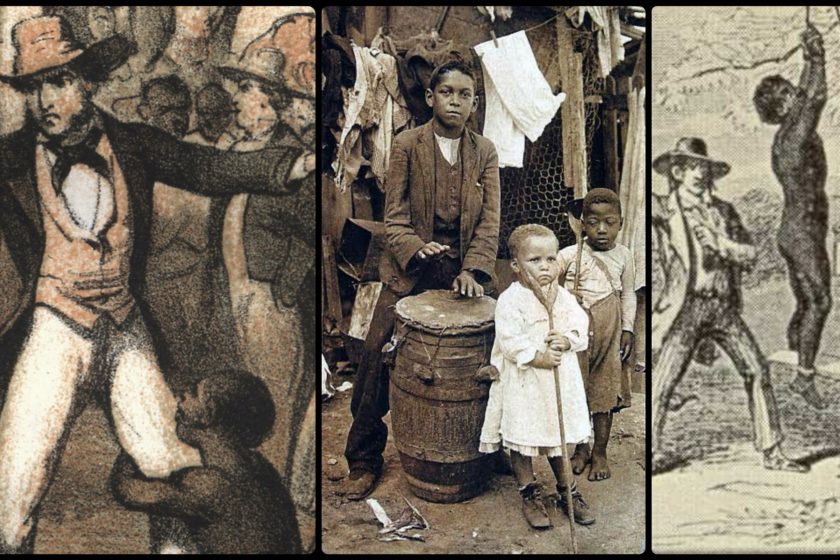
According to the latest United Nations data compiled by Worldometer, Argentina’s population stands at 46.23 million. Within this demographic, Afro-Argentines comprise a relatively small percentage, with 302,936 individuals comprising approximately 0.66% of the population.
In contrast, the majority of Argentina’s population, at least 97%, is of European descent. This demographic composition, however, is a relatively recent development and, as we are all aware, is a consequence of Spain’s decision to make Argentina white.
Around 300 years ago, there was not a single white European to be found on many shores, let alone as the dominant group in Latin America. The indigenous people who first inhabited the Americas, including Argentina, were dark-skinned. In the case of Argentina, what the powers that be don’t want you to know is that Argentina was home to dark-skinned indigenous populations.
Because there was a systematic plan to erase the presence and contributions of black people outside of Africa and the Caribbean, they came up with a plan to designate everyone black as “Afro” to hide the truth. The only purpose of this fictional “out-of-Africa” theory is to bury the fact that black people are indigenous to every continent on the face of the earth.
In historical accounts that push for a mostly European Latin America, this fact is often left out. However, authors like Anibal Quijano, who wrote about the coloniality of power, Walter Mignolo, and Edward Telles, author of “Pigmentocracies: Ethnicity, Race, and Color in Latin America”, have revealed the truth about the dark-skinned populations of Latin America. If you want to read more about them, you can find a list of sources at the end of this article.
Note: Although the term “afro-argentines” was a part of a larger conspiracy, I would use it for the purposes of this article and its flow.
How did the Afro-Argentines end up as an absolute minority?
Despite their declining numbers due to planned extermination between the 18th and 19th centuries, Afro-Argentines had a profound impact on Argentina’s music, dance, and art. They introduced influential rhythms and instruments, including the bombo legüero, which became an essential component of Argentine folklore.
Tango music and dancing, which have their roots in the Rio de la Plata region, are another manifestation of the influence of the Afro-Argentine community. They also introduced Candombe, a traditional Afro-Argentine music and dance style that is distinguished by its intricate footwork and energetic rhythms.
Through their contributions to traditional music, crafts, storytelling, and cuisine, Afro-Argentines enriched the country’s cultural heritage, leaving a lasting legacy that extends beyond music and dance to spiritual practices and traditional medicine.

Argentina’s leaders, in their pursuit of modernization, looked to Europe as a model. Even when Indigenous and Black Argentines had built something of value, the country’s leaders felt they could “build back better” by erasing the contributions of these communities and imposing their own image, ultimately claiming the achievements as their own. This method created an erasure narrative by ignoring the cultural legacy of Indigenous Black Argentines.
To uphold the idea that European culture was superior, they attempted to transform the country they saw as “black” and “uncivilized” into one that was predominately white and “civilized.” In this flawed view of the world, whiteness was considered advanced and civilized, while those with a God given Melanin pigmentation were considered backward and less important.
At the time, this ideology was common in almost every white European countries. It affected colonial and imperial efforts, domestic policies, and social attitudes, which had wide-ranging effects on other racial groups that were already struggling.
Just like what their brethren in genocide, Christopher Columbus did, when the white Spanish colonizers arrived in Argentina, they didn’t exactly roll out the “please welcome me wagon.” Rather, they intended to subjugate and enslave the native populations they encountered. Those who resisted were met with brutal suppression.
The Spanish brought the transatlantic slave trade to Argentina and used their resources and weapons to control the people they met. They established a system of slavery in Argentina that would have a profound and lasting impact on the country’s history and demographics, with the slave trade beginning in the 16th century and resulting in the deaths of an estimated 1.8 million enslaved black people during the Middle Passage alone.
Argentina abolished slavery in 1853, decreeing that all newborns of enslaved mothers would be free and granting freedom to any enslaved person entering Argentine territory. Although the Constitution of 1853 formally abolished slavery, the province of Buenos Aires did not implement the law until after 1861. Instead of improving their lives, abolition marked the beginning of a new era of struggle and marginalization for Afro-Argentines.
As Argentine leaders pursued modernization based on European values and ideals, they viewed Afro-Argentines as obstacles to progress. This perspective led to the implementation of strict laws that prevented Afro-Argentines from receiving social services, healthcare, and benefits, with disastrous outcomes like high infant mortality rates. The consequences were dire, prolonging social injustice, poverty, and inequality, and leaving Afro-Argentines powerless and marginalized.
Because the intention was to wipe out the afro-argentines males by every means necessary, the white Argentine government sent them to the Paraguayan War (1864-1870), which had a devastated effect on their population. Thousands were conscripted into the military with minimal training and preparation, thrust onto the frontline where they bore the brunt of the conflict.
Despite their significant sacrifices, their contributions. As if that were not enough, the Argentine government’s alleged use of biological tactics, through cholera and yellow fever epidemics, had a disproportionate and devastating impact on the Afro-Argentine population.
Many believed these communities were deliberately targeted, leading to catastrophic consequences that significantly reduced their numbers. This period marked a turning point in Afro-Argentine history, with unprecedented challenges to their survival and identity. Similar patterns of racial violence and marginalization unfolded across Latin America, as countries like Brazil and Cuba implemented policies aimed at eradicating or marginalizing their Black populations.
Despite the devastating impact of genocide on Afro-Argentines, the Argentine government pursued “Blanqueamiento,” a strategic plan to attract European immigrants and increase the white population. Under President Justo José de Urquiza, incentives like citizenship and social assistance benefits were offered, influenced by Juan Bautista Alberdi’s ideas.

His phrase “to govern is to populate” underscored the importance of immigration for national strength. Between 1870 and 1930, over seven million immigrants arrived, mainly from Spain and Italy, though about half eventually returned home. This influx of European settlers reshaped Argentina’s demographics, solidifying its identity as a predominantly white nation. Click here to find the 25th amendment.
By the early 1900s, Argentina’s systematic efforts to erase the Afro-Argentine population appeared to have succeeded. A 1905 article in Caras y Caretas triumphantly declared the supposed disappearance of the Black population, metaphorically describing how the “African tree” now produced “white flowers.”
This marked the culmination of a brutal process of racial cleansing, perpetuated through forced assimilation, immigration policies, and systemic racism, ultimately reducing the Afro-Argentine population to a shadow of its former self and cementing Argentina’s identity as a predominantly white nation.
The once-significant Afro-Argentine population had been reduced to a mere shadow of its former self, and Argentina had emerged as a nation dominated by whites.
The Faces behind the whitening (Blanqueamiento) of Argentina’s Population
One of the biggest faces of Argentina’s Whitening (Blanqueamiento) was none other than the dreaded, Domingo Faustino Sarmiento, who was a European Argentine activist and the 7th President of Argentina from 1868 to 1874.
Domingo Faustino Sarmiento’s presidency was marked by a push for modernization and European-style progress, but it came at a devastating cost for Afro-Argentines and indigenous populations. Sarmiento’s racist ideology, evident in his writings and policies, advocated for a white, European-dominated Argentina, erasing the country’s indigenous roots. His disdain for non-white populations was particularly explained by his comparison of mixed-race Gauchos to fertilizers.
Sarmiento’s policies, which included forced military conscription, mass executions, and segregation, strengthened Argentina’s apartheid regime. Inspired by his desire to imitate European countries, his vision of an all-white Argentina resulted in the systematic persecution and genocide of Afro-Argentines.

Domingo Faustino Sarmiento’s 1848 statement in El Progreso, “Twenty years hence, it will be necessary to travel to Brazil to see Blacks,” reflects his vision for Argentina’s demographics. During his presidency, policies were implemented that significantly impacted Afro-Argentines.
The exclusion of Afro-Argentines from the national census by 1875 is a notable example. Sarmiento’s government also enforced segregation and provided inadequate medical facilities for Afro-Argentine communities. Historical records indicate disparities in healthcare access during the cholera outbreak, with Afro-Argentines facing challenges in receiving medical treatment.
Black Argentine men were subjected to more severe penalties for criminal activity than their European counterparts, which triggered a cycle of intimidation and fear. This unequal application of justice was intended to control and dismantle Black families and communities, evoking the racist policies of the Jim Crow era in the United States.
Afro-Argentine women were severely affected by this same apartheid-like practices. They had to negotiate a confusing network of racial hierarchy in which their Black experience was continuously erased and undervalued.
In an attempt to better their lives, many turned to the legal system, but they encountered many obstacles and prejudices. With limited options and facing systemic racism, some of them formed relationships with white-European male settlers as a means of survival.
As a result, any Afro-Argentine woman who had a child with a white colonist was expected to “pass” the child off as white or Amerindian to hide their Black heritage. The economic downturn in Argentina led many Afro-Argentines and mulattos to seek alternative racial and ethnic identities, such as criollo, morocho, and pardo.

While in exile in Chile as a result of the politics being played at that time with the then military dictator, Juan Manuel de Rosas, Domingo Sarmiento made a damning statement against blacks in Argentina, and I quote him:
“We must be reasonable with the Spaniards,” he wrote, “by exterminating a savage people whose territory they were going to occupy, they merely achieved what all civilized people have done with savages, what colonization did consciously or unconsciously: absorb, destroy and exterminate.”
Sarmiento wrote “Facundo: Civilization and Barbarism” (1845)
This erasure was so widespread that even former President Carlos Saúl Menem later said wrongly that there are no Black people in Argentina, calling the problem a Brazilian one.

Over time, the historical and national consciousness of Afro-Argentines were gradually erased. One well-known example of this is the country’s first president, Bernardino Rivadavia, who had dark skin. Bernardino was said to have a dark appearance. He was later recognized as a reputable captain-general. His remains are buried today in a mausoleum on Plaza Miserere, next to Rivadavia Avenue, which is named after him.
Argentina’s national football team, La Albiceleste, is indeed a beloved and iconic team, but its lack of representation of Afro-Argentine players is a glaring reflection of the country’s complex and troubled history with racism.
Despite Afro-Argentines constituting a significant part of the population in the past, they now constitute less than 0.5% of Argentina’s total population, a result of systemic racism, forced assimilation, and genocide. The team’s European-dominated line up is a legacy of Argentina’s “White Mestizaje” ideology, which emphasized European superiority and sought to erase indigenous and African identities.
The continuing issues of erasure and systemic racism in Argentine society are underscored by the lack of representation in national teams, despite their cultural contributions. Furthermore, the recent incident involving members of Argentina’s football team making disparaging remarks about the African heritage of a French national team player is unacceptable and revealing. It highlights the deep-seated racism and hypocrisy that persists in Argentine society.

Even though systems of racism and erasure of history have made it hard for Afro-Argentines to keep their cultural identity, they do. In Buenos Aires, neighbourhoods like San Telmo and La Boca show how strong and long-lasting Afro-Argentine communities are, going against the idea that Argentina is mostly a white country.
Conclusion
As you have learned, the history of Argentina was more diverse than the one you observe today. The era of the Internet has exposed the atrocities committed against Afro-Argentinians by European colonists, who mainly originated from Spain and Italy.
Many European slave traders and colonists believed that the only way to modernize their nation was to get rid of anything black-related. To achieve this, the native people had to be killed or systematically driven away. This was the scenario in Argentina.
This inhumane act was committed not only in Argentina, but in virtually every nation worldwide, particularly in the continents of South and North America, Australia, New Zealand, the Philippines, India, and Canada. Since most historical data and events have been erased, most of us are unaware of the existence of black people outside of Africa and the Caribbean, including in areas that have become predominantly white.
One of the most horrific genocides in human history occurred in the Congo Free State around the turn of the 20th century, claiming an estimated 10-20 million lives. However, this tragic event has been largely forgotten in modern times. But once more, we are reminded of the Holocaust, and nothing has been done to repair the harm inflicted upon the indigenous black people by the Europeans.
To the Afro-Argentines, your story matters. Hopefully, one day, it will reach and resonate with even more people, contributing to a deeper understanding and appreciation of your experiences and heritage.
Credit
In addition to myself, other scholars have attempted to investigate the mystery surrounding the disappearance of the black population in Argentina. One renowned, notable scholar I can thank is Erika Edwards.
At the time of completing her research on the afro-argentine, she held the position of Associate Professor of Colonial Latin American History at the University of North Carolina-Charlotte. Her research is centered around Argentina, the African Diaspora, urban history, sexuality, motherhood, and education. She is the author of the following publications concerning the black population of Argentina:
- The Making of a White Nation: The Disappearance of the Black Population in Argentina,” History Compass (online) June 2018 The Making of a White Nation
- A Tale of Two Cities: Buenos Aires, Cordoba, and the Disappearance of the Black Population in Argentina” The Metropole, the official blog of the Urban History Association, May 2018 A Tale of Two Cities
- Pardo is the New Black: The Urban Origins of Argentina’s Myth of Black Disappearance” Global Urban History Blog, Dec 2016. Pardo is the New Black
You can find out more by visiting her website.
Other Sources
Telles, E. E. (2014). Pigmentocracies: Ethnicity, race, and color in Latin America. University of North Carolina Press.
Quijano, A. (2000). Coloniality of power, eurocentrism, and Latin America. Nepantla: Views from South, 1(3), 533-580.
Mignolo, W. D. (2005). The idea
Leave a Reply