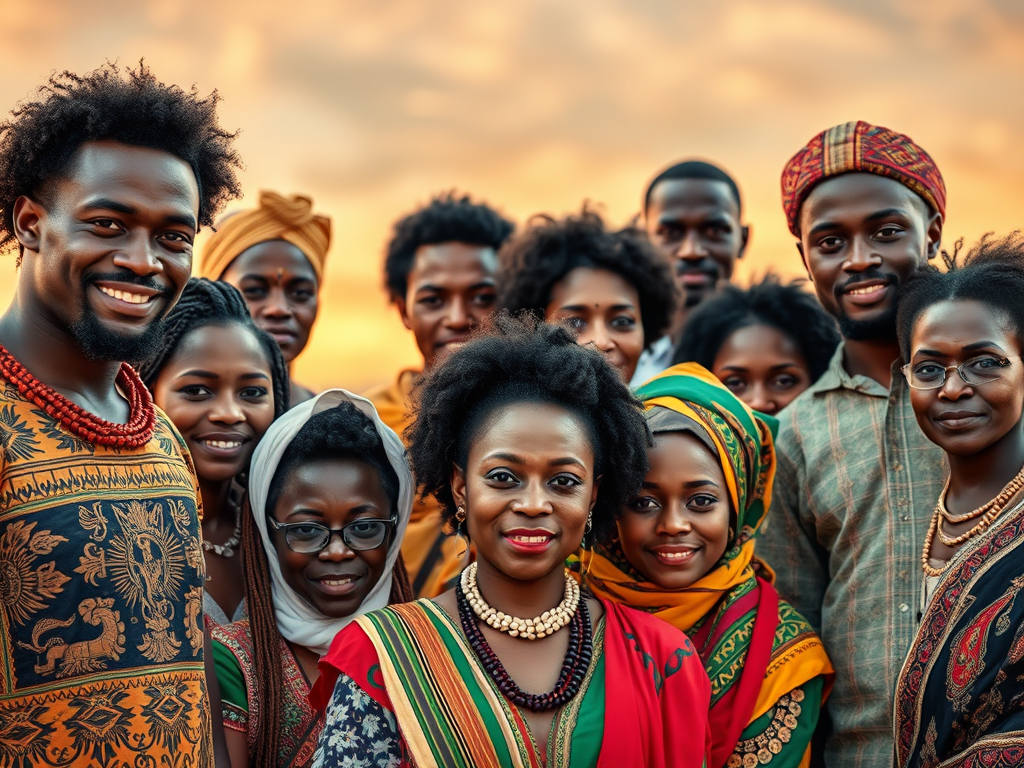
About 2.1 billion people, or 27% of the global population, are thought to identify as Black. Asians make up the majority of the world’s population, accounting for roughly 60%, followed by Whites at around 8%, with the remainder divided among other ethnic groups.
Read more: 10 Nations with the Largest White Populations
The vast majority of Black people live in Africa, but significant populations also exist in the Americas, Europe, Asia, and Oceania. This article will only cover the top 10 countries with the largest Black populations worldwide.
Note: that most of these figures may vary depending on the source and criteria used.
10. Angola
Angola has a population of 39 million people, with approximately 35.1 million Black people (90%), ranking as the world’s 10th largest Black population.
Located in Southern Africa, Angola borders the Democratic Republic of the Congo, Namibia, Zambia, and the Atlantic Ocean. Cities such as Luanda, Huambo, and Benguela thrive, and the economy is driven by oil production and plentiful mineral resources.
9. Uganda
Uganda has a population of 41 million people, with approximately 40.6 million Black people (99%), placing it as the world’s 9th largest Black population. Located in East Africa, Uganda borders South Sudan, Kenya, Tanzania, Rwanda, and the Democratic Republic of the Congo.
Cities like Kampala, Entebbe, and Jinja thrive, and the country’s stunning landscapes feature savannas, mountains, and lakes. Uganda’s lively music, dance, and cultural heritage contribute to the country’s vibrant atmosphere.
8. Kenya
Kenya has a population of 43 million people, including approximately 42.57 million Black people (99%), making it the world’s 8th largest Black population.
Located in East Africa, Kenya borders South Sudan, Ethiopia, Somalia, Tanzania, Uganda, and the Indian Ocean. Cities such as Nairobi, Mombasa, and Kisumu thrive, with ethnic groups such as the Kikuyu, Luhya, and Luo contributing to the country’s diverse cultural heritage.
7. Tanzania
Tanzania has a population of 44.5 million people, of which approximately 44 million are Black (99%), making it the world’s 7th largest Black population. Located in East Africa, Tanzania shares borders with Burundi, Rwanda, Uganda, Kenya, the Democratic Republic of the Congo, Zambia, Malawi, and Mozambique.
The country is home to natural wonders like Mount Kilimanjaro, the Zanzibar Archipelago, and the Serengeti National Park, with Bantu-speaking peoples like the Sukuma, Nyamwezi, and Chagga contributing to its rich cultural heritage.
6. South Africa
South Africa has a population of 60.4 million people, with approximately 50.5 million Black people (81.4%), making it the world’s 6th largest Black population. Located at Africa’s southern tip, South Africa borders Namibia, Botswana, Zimbabwe, Mozambique, and Eswatini. The nation is renowned for its diverse wildlife, breathtaking scenery, and lively culture.
5. United States
The United States has a population of around 331.9 million people, with an estimated 46.8 million Black people (14.1%), making it the world’s 5th largest Black population.
The Black population in the United States is diverse, with origins in West and Central Africa, and has had a significant impact on American history, culture, and identity. Black Americans are concentrated in cities such as New York City, Chicago, Detroit, Atlanta, and Los Angeles, as well as in the Southern states, particularly the “Black Belt” region spanning Virginia to Mississippi.
4. DR Congo
The DR Congo has a population of approximately 111.8 million people, with about 106 million Black people (95%), making it the 4th country with the largest Black population worldwide. Ethnic groups such as the Kongo, Luba, and Mongo contribute to the country’s heritage. With more than 450 different ethnic groups and hundreds of languages spoken, the Democratic Republic of the Congo is a culturally rich and diverse country.
3. Ethiopia
Ethiopia has a population of approximately 115.5 million people, with around 108 million Black people (95%), making it the country with the third-largest Black population worldwide.
Interestingly, Ethiopia is one of Africa’s oldest nations, with a long history and a vibrant culture. The nation’s varied heritage is influenced by ethnic groups like the Oromo, Amhara, and Tigray.
2. Brazil
Brazil has a population of approximately 212.6 million people, with about 112.7 million people of African descent (55%), making it the country with the second-largest Black population worldwide.
Black Brazilians have made significant contributions to the country’s culture, music, and identity, particularly in Salvador, Rio de Janeiro, and São Paulo.
1. Nigeria
Nigeria has a population of approximately 232 million people, with about 218 million Black people (95%), making it the country with the world’s largest Black population. Over 250 ethnic groups, including the Hausa, Yoruba, and Igbo, have contributed to the nation’s legacy.
Nigeria’s influence extends far beyond its borders, with its citizens making significant contributions to global culture, sports, politics, and economics. In addition, Nigeria’s music and film industries are booming, with Afrobeat and Highlife becoming well-known worldwide and Nollywood ranking among the biggest film industries in the world.
References
- Central Statistical Agency (CSA). (2022). Population and Housing Census of Ethiopia.
- Instituto Brasileiro de Geografia e Estatística (IBGE). (2022). Censo Demográfico 2022.
- Instituto Nacional de Estatística (INE). (2022). Censo 2022. Angola.
- Institut National de la Statistique (INS). (2022). Enquête par Grappes à Indicateurs Multiples (MICS) 2022. DR Congo.
- Kenya National Bureau of Statistics (KNBS). (2022). Kenya Population and Housing Census 2019.
- National Bureau of Statistics (NBS). (2022). Population and Housing Census. Nigeria.
- National Bureau of Statistics (NBS). (2022). Tanzania Population and Housing Census 2022.
- Population Reference Bureau (PRB). (2022). World Population Data Sheet 2022.
- Statistics South Africa. (2022). Mid-year Population Estimates 2022.
- Uganda Bureau of Statistics (UBOS). (2022). Uganda Population and Housing Census 2022.
- United Nations Department of Economic and Social Affairs (UNDESA). (2022). World Population Prospects 2022.
- United States Census Bureau. (2022). American Community Survey (ACS) 2022.
- World Bank. (2022). World Development Indicators, 2022.
Leave a Reply