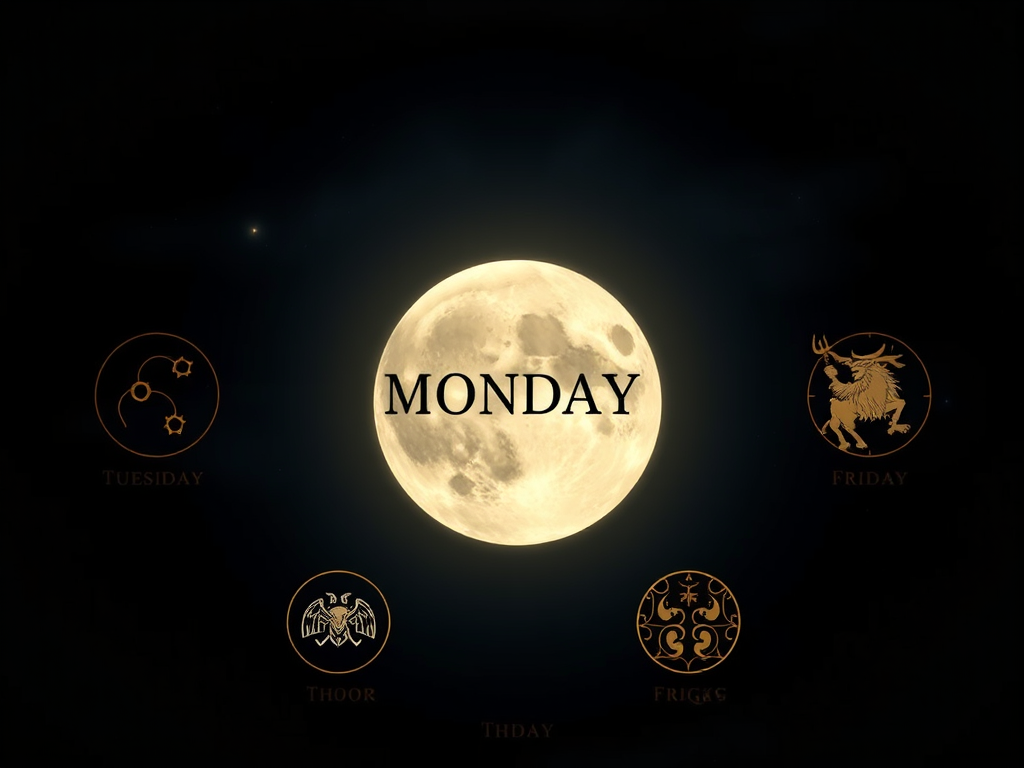
Ancient pagan cultures have left behind traces of their traditions, symbols, and practices. This legacy can be seen in the names of the days of the week and months, which were directly acquired from Roman and Germanic pagan gods and goddesses. Let’s have a closer look at how these names came to be.
1. Monday
Monday originates from the Old English ‘Mōnandæg,’ meaning Moon’s Day, a day sacred to the Anglo-Saxons who revered the lunar deity associated with the moon’s cycles and mystical powers.
This day was designated to honor the moon, reflecting its association with feminine energy, fertility, and the mysteries of the natural world. The lunar deity was likely believed to govern the moon’s phases and influence the tides of life.
This devotion to the moon was not unique to the Anglo-Saxons. Many ancient cultures celebrated lunar deities and cycles, including the ancient Romans, who honoured Luna; the Norse and Germanic tribes; the ancient Greeks, who revered Selene; the Babylonians and Assyrians, who worshipped Sin and Nanna; and Hindu and Vedic cultures, which celebrated Chandra. In these cultures, Mondays were often considered sacred for reflection, renewal, and honouring the cycles of nature, a day for new beginnings.
2. Tuesday
Tuesday’s origins are rooted in Old English ‘Tīwesdæg,’ meaning Tiw’s Day, named after the Norse god Tiw (Tyr), who embodied bravery, honor, and justice.
This day likely honoured Tiw’s virtues, reflecting the importance of law and order in ancient Germanic society. Similar gods were celebrated in other cultures, including Tiwaz in Germanic tribes, Ares in Ancient Greece, and Mars in Roman mythology.
3. Wednesday
Wednesday’s origins lie in Old English ‘Wōdnesdæg,’ meaning Woden’s Day, named after the Norse god Odin (Woden), revered for wisdom, poetry, and war strategy. As the All-Father, Odin was celebrated for his multifaceted nature, influencing various aspects of life.
Similar gods were celebrated in other cultures to mark this day, including Wodan in Germanic tribes and Wodanaz in Continental Germanic worship. Parallels can also be seen with the Roman planet Mercury, which is associated with communication, wisdom, and swiftness.
4. Thursday
Thursday’s origins come from Old English ‘Þūnresdæg,’ meaning Thunor’s Day, named after Thor, the Norse god of thunder and protection. In Norse mythology, Thor was idolized for his strength and role as defender of mankind. Similar pagan gods were celebrated in other cultures to mark this day, including Donar in Germanic tribes and Þunraz in Continental Germanic worship, with parallels to the Roman planet Jupiter, associated with power and authority.
5. Friday
Friday’s origins come from Old English ‘Frīgedæg,’ meaning Frig’s Day, named after the Norse goddess Frigg, revered for her beauty, love, and fertility. According to Norse tradition, as Odin’s wife and queen of the gods, Frigg was celebrated for her maternal instincts and wisdom.
This day likely honoured Frigg’s influence over love, marriage, and family, highlighting the importance of relationships in ancient Germanic societies. On this day, similar goddesses, including the Roman Venus and Greek Aphrodite, both embodying love and beauty, were honoured.
6. Saturday
Saturday originates from the Old English ‘Sæturnesdæg,’ literally meaning Saturn’s Day, named after the Roman god Saturn, revered for his association with agriculture, wealth, and time, with the Old English term being influenced by the Latin ‘Saturni dies.’
Interestingly, there is a possible connection between Saturn and the figure of Satan. It is particularly striking that this day, associated with Saturn worship, coincides with the Sabbath day traditionally observed by the ancient Israelites.
In ancient Rome, Saturn was celebrated as the god of farming, prosperity, and the harvest season, often depicted with a sickle, symbolizing his connection to the earth and its bounty. Similar gods and deities were celebrated on the same day in other cultures, such as the Greek god Cronus, which was associated with time, agriculture, and the cycles of life.
7. Sunday
Sunday originates from the Old English ‘Sunnandæg,’ literally meaning Sun’s Day, named after the Sun goddess revered for her life-giving warmth and light. The Sun was regularly worshipped as a powerful deity in many ancient societies, including Ancient Egypt (Ra), Ancient Greece (Helios), Ancient Rome (Sol Invictus), the Inca Empire (Inti), and various Native American cultures. The Latin influence can be seen in the Romance languages, where Sunday is named after the Latin ‘Dies Solis,’ meaning ‘Day of the Sun.’
Some modern occult and pagan traditions associate Sunday with themes of power, magic, and spiritual growth, drawing on ancient solar mythology. The shift from observing the Sabbath on Saturday to Sunday has been linked to early Christianity’s attempts to match the solar worship practices of the Roman Empire.
Months of the year and its Pagan Influences
The modern calendar used worldwide is the Gregorian calendar, introduced by Pope Gregory XIII in 1582 as a refinement to the Julian calendar, which was established by Julius Caesar in 46 BC. The month names come from Roman gods, festivals, and leaders.
1. January
January is named after the Roman god Janus, often depicted with two faces, symbolizing beginnings, endings, and the ability to look both forward and backward. As the god of transitions, gateways, and new beginnings, Janus is a fitting namesake for the first month of the year.
This dual nature of Janus is reflected in January’s themes, which include reflection on the past year and setting intentions for the future. January is also associated with various festivals and celebrations, such as New Year’s Day on January 1st, symbolizing new beginnings and resolutions. In ancient Rome, January was a time for honouring Janus with offerings and rituals, seeking blessings for the coming year.
2. February
February’s origins lie in the Roman festival of Purification, Februa, which involved rituals for cleansing and purification. The name comes from the Latin “februum,” meaning purification. In ancient Rome, February was a time for spiritual cleansing, atonement, and preparation for the coming year, marked by festivals like Lupercalia, which celebrated fertility and purification.
Today, February is associated with themes of love, as seen in Valentine’s Day, and retains echoes of its ancient roots in purification and renewal.
3. March
March is named after Mars, the Roman god of war, revered for strength, courage, and strategic prowess. In ancient Rome, March marked the start of military campaigns, fittingly aligning with Mars’ association with war. This legacy continues, with March evoking themes of strength, conflict, and new beginnings.
4. April
April’s origins may stem from the Latin “aperire,” meaning “to open,” symbolizing spring growth. This month is also linked to Venus, the Roman goddess of love and beauty, echoing Greek worship of Aphrodite. These influences tie April to themes of fertility, love, and renewal, reflecting the season’s transformative energy.
5. May
May is named after Maia, the Roman goddess of fertility, growth, and springtime. The month reflects her themes of nurturing and new life, marked by blooming flowers and celebrations of renewal and abundance.
6. June
June is named after Juno, the Roman goddess of marriage, childbirth, and women’s fertility. In ancient rome, she was worshipped as the queen of the gods. Juno embodied feminine power and maternal protection. Her legacy lives on, with June remaining a popular month for weddings and new beginnings, reflecting her association with marriage and partnership.
7. July
July is named after Julius Caesar, who introduced the Julian calendar. Originally called Quintilis (“the fifth month”), it was renamed July in Caesar’s honor after his death, marking a shift in Roman culture toward naming months after influential leaders. Today, July is associated with summer warmth but is rooted in Roman politics and Caesar’s legacy.
8. August
August is named after Augustus Caesar, Rome’s first emperor. Originally Sextilis (“the sixth month”), it was renamed August due to his significant victories, including the conquest of Egypt. This renaming cemented Augustus’ legacy alongside Julius Caesar’s, tying August to themes of power and ambition.
9. September
September’s name comes from the Latin “septem,” meaning “seven,” as it was the seventh month in the Roman calendar. Despite the calendar shift, the name stuck. September is tied to harvests and seasonal transitions, and today is often associated with new beginnings, especially in education.
10. October
October’s name comes from the Latin “octo,” meaning “eight,” reflecting its original position in the Roman calendar. The month is tied to autumn harvests, festivals, and vibrant fall foliage, with modern associations including Halloween, which has roots in ancient harvest celebrations.
11. November
November’s name comes from the Latin “novem,” meaning “nine,” reflecting its original position in the Roman calendar. The month is associated with harvest festivals, gratitude, reflection, and remembrance, marked by celebrations like Thanksgiving and Veterans Day.
12. December
December’s name comes from the Latin “decem,” meaning “ten,” reflecting its original position in the Roman calendar. The month is associated with winter festivities, including ancient Roman festivals like Saturnalia, and modern holidays like Christmas and Hanukkah, symbolizing light, family, and celebration during the darkest time of the year.
Conclusion
As you have read, the names of the weeks and months did not just originate from Rome and the Germanic/Norse cultures, they were also named after the gods and icons they believed in. We must pray for the gift of discernment, which allows us to understand the evil devices.
Leave a Reply